
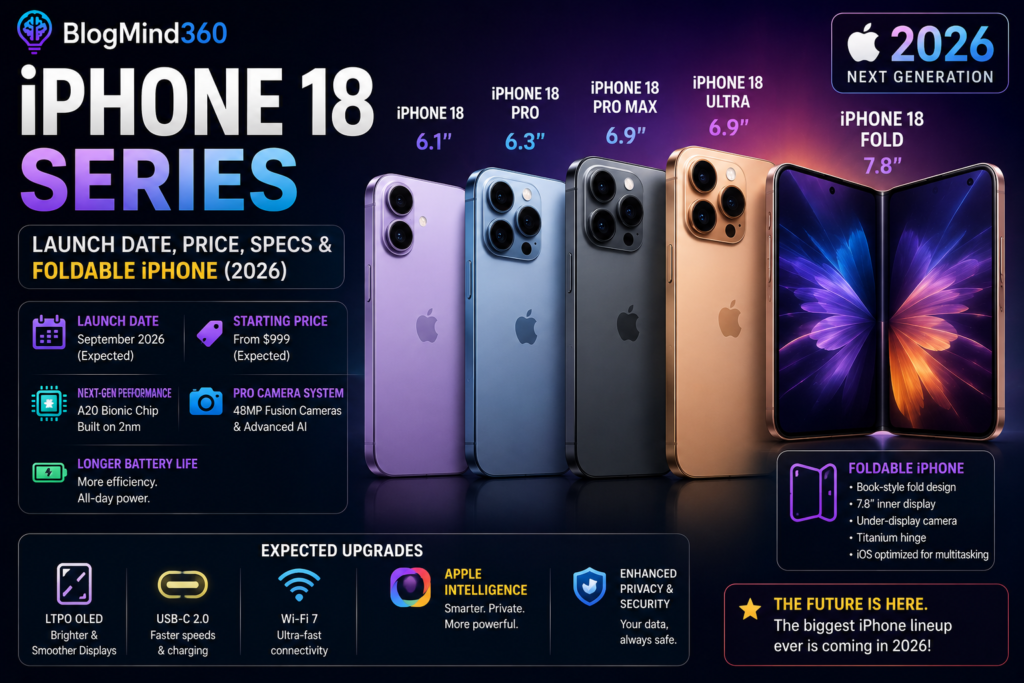
Quick Answer: Apple’s iPhone 18 series is rumoured to launch on September 9, 2026, though Apple has not officially confirmed the date. Leaks point to an A20 Pro chip built on a 2nm process, a variable-aperture main camera on Pro models, a battery exceeding 5,000mAh on the Pro Max, and Apple’s first-ever foldable iPhone with a 7.8-inch inner display. Unlike past years, only the Pro models and the foldable are expected this September, with the standard iPhone 18 and iPhone 18e reportedly delayed to spring 2027.
Every August brings the same ritual: a flood of leaks, supply-chain reports, and dummy unit photos ahead of Apple’s next iPhone launch. This year’s cycle is shaping up to be one of the more consequential ones in recent memory, not because of a single headline feature, but because Apple is reportedly rewriting its own playbook on how the iPhone lineup gets released.
None of this comes from Apple directly. As always this time of year, the picture is being pieced together from supply chain leaks, analyst notes, and dummy unit photos, some more reliable than others. We’ve focused this guide on the details that have shown up consistently across multiple independent reports, while flagging clearly where numbers are still speculative.
Here is everything credibly reported so far about the iPhone 18 series: the rumoured launch date, the split release strategy, the Pro model upgrades, and the foldable iPhone that could finally give Apple a genuine answer to Google’s Pixel 11 Pro Fold and Samsung’s Galaxy Z Fold line.
iPhone 18 Launch Date: September 9, 2026
Apple has not confirmed anything officially, but multiple reports point to September 9, 2026 as the likely date for Apple’s autumn event. That lines up with Apple’s typical pattern of holding its iPhone launch on the Tuesday or Wednesday following the US Labor Day holiday, and it would put the event roughly one year after the iPhone 17 series was unveiled on September 9, 2025.
If the event does land on September 9, the usual Apple cadence would suggest pre-orders opening around September 11 or 12, with retail availability following about a week later. None of this is locked in yet, and Apple could just as easily choose a different day within that same window.
Apple’s own event scheduling has followed a fairly predictable pattern in recent years. The iPhone 17 series was announced on September 9, 2025, with pre-orders opening September 12 and retail sales beginning September 19. If Apple repeats that same rhythm for the iPhone 18 Pro launch, buyers should have a reasonably clear sense of the full timeline once the keynote date itself is confirmed, likely through an official invite sent out roughly two to three weeks beforehand.
A Major Change to Apple’s Launch Strategy
The more significant story this year may not be the specs at all, it’s the strategy. Multiple reports now agree that Apple is planning to split the iPhone 18 family across two separate release windows for the first time in years.
Under this rumoured plan, the iPhone 18 Pro, iPhone 18 Pro Max, and Apple’s first foldable iPhone would all launch together in September 2026. The standard iPhone 18 and the more affordable iPhone 18e, meanwhile, would be pushed back to the first half of 2027, alongside a next-generation iPhone Air. If accurate, this would mean Apple’s mainstream, non-Pro iPhone buyers would need to wait considerably longer than usual, or simply stick with the current iPhone 17 through the 2026 holiday shopping season.
iPhone 18 Pro and Pro Max: Expected Upgrades
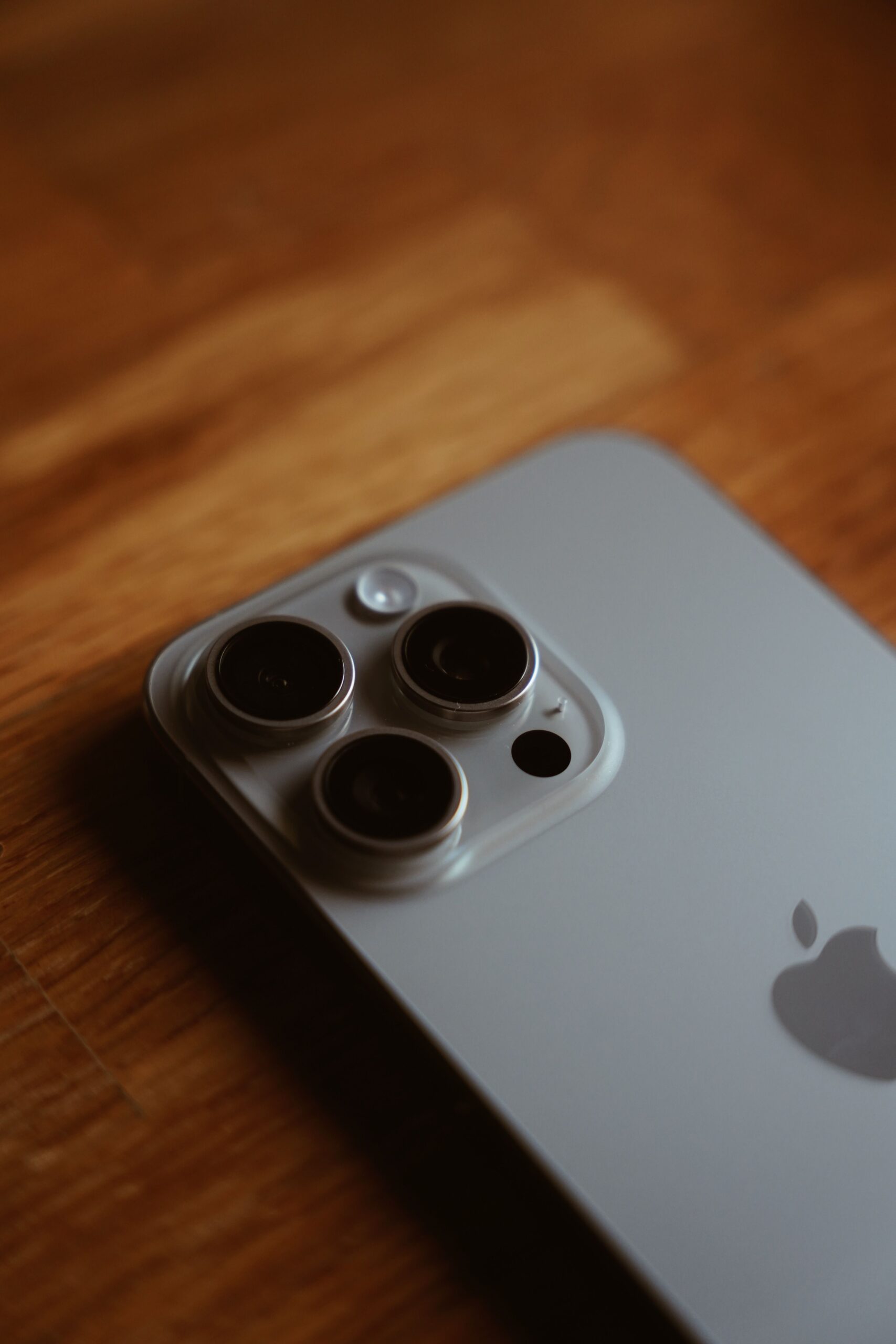
Design-wise, the iPhone 18 Pro and Pro Max are expected to largely retain the look Apple introduced with the iPhone 17 Pro series, rather than pursuing another dramatic redesign so soon. The bigger changes this year are reportedly happening under the hood.
A20 Pro Chip on a 2nm Process
The headline upgrade is Apple’s next-generation A20 Pro chip, expected to be manufactured on TSMC’s advanced 2nm process for the first time. Early reports suggest this could deliver up to 15 percent faster performance and around 30 percent better power efficiency compared to the current generation, though Apple has not confirmed these figures. Apple is also said to be exploring wafer-level multi-chip module packaging, a manufacturing approach that would place memory closer to the processor, potentially boosting on-device Apple Intelligence performance while freeing up internal space for other components like a larger battery.
Notably, this puts Apple on similar footing to Google, which just introduced its own 2nm chip, the Tensor G6, inside the Pixel 11 Pro Fold. Both companies appear to be racing toward the same manufacturing node at roughly the same time, which should make for an interesting performance comparison once both chips ship in real devices.
Variable-Aperture Camera
Camera hardware could see one of its more meaningful updates in years. The iPhone 18 Pro and Pro Max are rumoured to introduce a variable-aperture main camera, a feature borrowed conceptually from dedicated DSLR cameras, where the aperture physically adjusts based on lighting conditions rather than staying fixed. Apple is also reportedly testing larger apertures on both the main and telephoto lenses, which could translate into noticeably better low-light photography and more natural background separation in portrait-style shots.
Variable aperture has appeared on a handful of Android flagships in past years, most notably from Samsung, but never on an iPhone. If Apple does ship this feature, it would mark one of the more genuinely differentiated camera upgrades the Pro line has received since the introduction of the telephoto lens itself, rather than the incremental megapixel and software improvements that have characterised recent generations.
Bigger Battery
Battery capacity is expected to jump significantly, particularly on the Pro Max. Some reports suggest the US version could exceed 5,000mAh, which would make it one of the largest batteries ever fitted into an iPhone. Combined with the efficiency gains from the new 2nm chip, this could add up to a genuinely noticeable improvement in real-world battery life rather than the incremental gains iPhone buyers have gotten used to in recent years.
For context, the current iPhone 17 Pro Max ships with a battery in the 5,000mAh range depending on region, so a further increase would continue a multi-year trend of Apple steadily growing battery capacity generation over generation, largely to offset the power demands of increasingly capable on-device AI features running through Apple Intelligence.
New Colour Options
Leaked colourways for the Pro models include Dark Cherry, Light Blue, Dark Grey, and Silver, with Dark Cherry expected to replace the Cosmic Orange shade that debuted on the iPhone 17 Pro series. As with all pre-launch colour leaks, these remain unconfirmed until Apple’s own announcement.
Apple’s First Foldable iPhone
The single biggest addition to this year’s lineup, at least in terms of genuine novelty, is Apple’s long-rumoured foldable iPhone. After years of speculation, multiple credible reports now suggest it could actually arrive alongside the Pro models this September.
The device is expected to use a book-style folding design, similar in concept to the Google Pixel 11 Pro Fold and Samsung’s Galaxy Z Fold line, with a 5.5-inch outer display and a 7.8-inch inner screen when unfolded. Apple is reportedly working on a notably thin design, along with a custom hinge mechanism aimed at minimising the visibility of the crease down the middle of the display, one of the most persistent complaints levelled at book-style foldables across the industry.
One unusual detail: the foldable iPhone may feature a side-mounted Touch ID sensor rather than Face ID, a departure from every other current iPhone. Other leaked specifications include a battery in the 4,800mAh to 5,000mAh range, up to 12GB of RAM, storage options potentially reaching 1TB, and a dual-camera system. Pricing is expected to start around $1,999, positioning it well above Apple’s existing flagship iPhones and squarely in the same ultra-premium territory as the Pixel 11 Pro Fold and Samsung’s top-tier foldables.
The decision to potentially skip Face ID in favour of Touch ID on this specific model is worth pausing on. Apple has used Face ID exclusively across its iPhone lineup since the iPhone X, so reintroducing a fingerprint sensor, even a side-mounted one, would be a notable departure. The most likely explanation is simple engineering pragmatism: fitting Face ID’s depth-sensing hardware into a genuinely thin, folding chassis is a much harder problem than embedding a capacitive fingerprint sensor into a power button, at least for a first-generation device.
Could iPhone 18 Pro Models Get More Expensive?
Pricing is shaping up to be one of the more contentious parts of this year’s rumour cycle. Multiple reports suggest Apple could raise prices on the iPhone 18 Pro and Pro Max by as much as $200 compared to their iPhone 17 Pro equivalents, driven partly by rising memory-chip costs affecting the broader industry. Apple has reportedly already begun raising prices on some iPad and MacBook models for similar reasons, which lends some credibility to the iPhone pricing rumours as well.
None of this is confirmed, and Apple has historically resisted major price increases on its core iPhone lineup even when component costs rise, often absorbing the difference rather than passing it directly to consumers. Still, if the $200 increase does materialise, it would mark one of the more significant iPhone price jumps in recent years.
It is worth noting that memory prices have been a genuine industry-wide pressure point throughout 2026, affecting manufacturers well beyond Apple. If DRAM and NAND flash costs continue climbing into the autumn, a price increase becomes considerably more plausible than it would in a normal year, since Apple would be absorbing higher input costs across its entire product line simultaneously, not just on the iPhone.
What Happens to the Standard iPhone 18?
If the split-launch rumours hold up, buyers hoping for a standard, non-Pro iPhone 18 will need patience. Reports consistently point to the regular iPhone 18 and the budget-friendly iPhone 18e arriving in the first half of 2027, potentially around March or April, alongside a redesigned iPhone Air 2.
This would mean the current iPhone 17 remains Apple’s newest mainstream iPhone through the entire 2026 holiday shopping season and for roughly a year and a half after its original September 2025 launch, a notably longer gap than Apple buyers have grown accustomed to. Early leaks about the delayed standard iPhone 18 suggest it could ship with 9GB of RAM, less than the 12GB expected on the Pro models and the foldable, which would limit how complex an on-device AI workload the base model can realistically handle.
iPhone 18 Series: Expected Specifications at a Glance
| Feature | Expected Detail |
|---|---|
| Rumoured launch date | September 9, 2026 (unconfirmed) |
| Chip | A20 Pro, TSMC 2nm process |
| Performance gains | Up to 15% faster, ~30% more efficient (unconfirmed) |
| Main camera | Variable aperture (Pro models only) |
| Pro Max battery | Potentially over 5,000mAh |
| Pro colours | Dark Cherry, Light Blue, Dark Grey, Silver |
| Foldable displays | 5.5-inch outer, 7.8-inch inner |
| Foldable RAM/storage | Up to 12GB RAM, up to 1TB storage |
| Foldable starting price | Around $1,999 (unconfirmed) |
| Standard iPhone 18 launch | Reportedly delayed to spring 2027 |
| Pro pricing change | Possible increase of up to $200 (unconfirmed) |
iPhone 18 Pro Fold vs Pixel 11 Pro Fold vs Galaxy Z Fold
If Apple’s foldable iPhone does arrive this September, 2026 will end up being the year all three major smartphone makers finally compete directly in the same premium foldable category. Google’s Pixel 11 Pro Fold already launched in India this month at ₹1,86,999, with an 8.0-inch inner display, IP68 durability, and a 2nm Tensor G6 chip. Samsung’s Galaxy Z Fold line remains the category’s most established player with the longest track record in the segment.
Apple’s rumoured $1,999 starting price would put its foldable meaningfully above the Pixel 11 Pro Fold, continuing Apple’s usual pattern of entering a category later but pricing itself at the top of it. Whether Apple’s execution, particularly on hinge durability and crease visibility, can justify that premium will be one of the more interesting comparisons to watch once actual units are in reviewers’ hands.
There is also a broader strategic question worth considering. Apple has historically waited for a technology category to mature before entering it, then used its software ecosystem and brand loyalty to capture premium share rather than competing purely on specs or price, the same playbook it followed with wireless earbuds, smartwatches, and tablets. A foldable iPhone arriving years after Samsung and roughly on the same timeline as Google’s more mature foldable efforts fits that pattern closely, and early sales performance will be a useful signal of whether that strategy still works in a product category increasingly shaped by Android competitors with real head starts.
Should You Wait for the iPhone 18, or Buy Now?
Anyone currently shopping for a new iPhone faces a genuinely different calculus this year because of the rumoured split launch. If you specifically want a Pro-tier iPhone or Apple’s first foldable, waiting until September makes sense, since those models are the ones reportedly arriving this year. If you were hoping for a standard, more affordable iPhone 18, the current iPhone 17 will likely remain your best modern option for a considerably longer stretch than usual, potentially through the entire 2026 holiday season and into 2027.
For readers comparing across ecosystems rather than committing to iPhone specifically, it is worth weighing Apple’s rumoured foldable against what is already shipping today, including our coverage of the Google Pixel 11 Pro Fold, which offers a real, tested alternative rather than a device still built entirely on leaks.
Frequently Asked Questions
When will the iPhone 18 series launch?
Reports point to September 9, 2026 as the likely launch date, though Apple has not officially confirmed this.
Will all iPhone 18 models launch together?
Likely not. Reports suggest only the iPhone 18 Pro, iPhone 18 Pro Max, and Apple’s first foldable iPhone will launch in September 2026, with the standard iPhone 18 and iPhone 18e delayed to spring 2027.
What chip will the iPhone 18 Pro use?
The iPhone 18 Pro and Pro Max are expected to use Apple’s new A20 Pro chip, built on TSMC’s 2nm manufacturing process.
Will the iPhone 18 Pro get a new camera feature?
Yes, reports suggest a variable-aperture main camera, a first for iPhone, along with larger apertures on the main and telephoto lenses for improved low-light photography.
How much will Apple’s foldable iPhone cost?
Early reports suggest a starting price of around $1,999, though this is unconfirmed and subject to change before an official announcement.
Will iPhone 18 Pro prices increase?
Some reports suggest a possible price increase of up to $200 on the Pro and Pro Max models, driven by rising memory-chip costs, though this has not been confirmed by Apple.
What colours will the iPhone 18 Pro come in?
Leaked colour options include Dark Cherry, Light Blue, Dark Grey, and Silver, though these remain unconfirmed until Apple’s official announcement.
When will the standard iPhone 18 launch?
If current reports are accurate, the standard iPhone 18 and iPhone 18e will launch in the first half of 2027, alongside a new iPhone Air 2, rather than this September.
Will the iPhone 18 Pro use Touch ID or Face ID?
The standard Pro and Pro Max models are expected to keep Face ID. It is specifically Apple’s rumoured foldable iPhone that may use a side-mounted Touch ID sensor instead.
How does the rumoured iPhone foldable compare to Android foldables?
At a rumoured $1,999 starting price, Apple’s foldable would sit above Google’s Pixel 11 Pro Fold, which launched in India at ₹1,86,999, continuing Apple’s pattern of entering established categories at a premium price point.
Final Verdict
Even accounting for the usual pre-launch noise and conflicting leaks, the iPhone 18 cycle looks genuinely consequential. A move to 2nm chip manufacturing, a real camera hardware upgrade in variable aperture, and Apple’s first foldable device after years of speculation would make for one of the more significant iPhone launches in recent memory, regardless of how the split-release strategy shakes out.
The bigger unknown is how buyers will respond to a longer wait for the standard iPhone 18, and whether Apple’s foldable can compete credibly against devices like the Pixel 11 Pro Fold, which have already had a head start in the market. As with every pre-launch cycle, treat these details as informed speculation rather than fact until Apple takes the stage. We’ll update this guide as soon as anything is officially confirmed, so keep an eye on our Gadget section in the weeks ahead.