
| Quick Answer
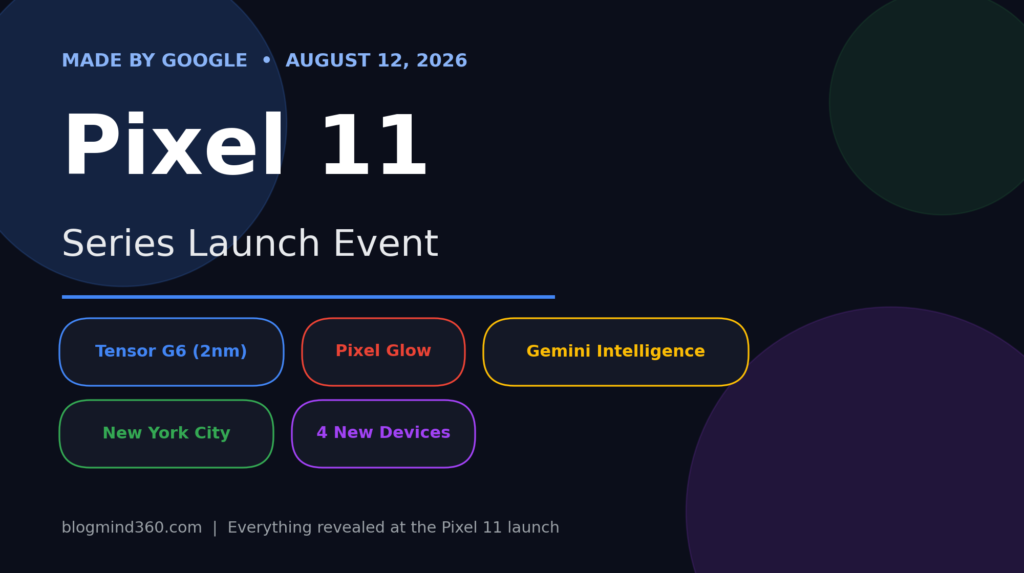
Google unveiled the Pixel 11 series at its Made by Google event on August 12, 2026, in New York City. The lineup includes the Pixel 11, Pixel 11 Pro, Pixel 11 Pro XL, and Pixel 11 Pro Fold, all powered by the new 2nm Tensor G6 chip. Prices start around $799, and the phones are expected to go on sale August 20, 2026. Google also introduced the Pixel Watch 5 and a new AI system called Gemini Intelligence. |
The wait is finally over. After months of leaks, regulatory filings, and teaser campaigns, Google took the stage in New York on August 12, 2026, for its annual Made by Google event — and the Pixel 11 series is officially here. From a brand-new 2nm processor to a glowing notification light that has already become the most talked-about design change in years, this year’s launch is one of the most significant hardware updates in Pixel history.
In this guide, we break down everything Google announced (and everything leaks got right or wrong): the full Pixel 11 lineup, pricing, release date, camera and chip upgrades, the new Pixel Watch 5, and whether it’s actually worth upgrading from your current phone.
What Is the Made by Google 2026 Event?
Made by Google is the company’s annual hardware showcase, where it unveils new Pixel phones, wearables, and software features for the year ahead. The 2026 edition was held on Wednesday, August 12, at 6:00 PM ET / 3:00 PM PT in New York City, marking the second year in a row Google chose NYC over its usual Bay Area venue.
This year’s show leaned heavily into star power, with athletes and creators including Stephen Curry, Shubman Gill, and Ayami Nakajo making appearances, and comedian Trevor Noah hosting the keynote. The event was livestreamed on the official Made by Google YouTube channel, making it accessible to anyone at home rather than just the invited press and influencers in the room.
Why this event matters: Unlike Apple and Samsung, Google confirms its launch date weeks in advance and combines hardware reveals with major software announcements — this year centered on “Gemini Intelligence,” a more capable, multi-step version of the Gemini assistant baked directly into the new Pixels.
Pixel 11 Series Lineup: Four Models Explained
Google expanded the Pixel 11 family to four devices, giving buyers more choice at different price points than ever before:
- Pixel 11 — the standard flagship, aimed at mainstream buyers
- Pixel 11 Pro — a compact pro model with the full camera system
- Pixel 11 Pro XL — the largest screen with the same pro-level hardware
- Pixel 11 Pro Fold — Google’s third-generation foldable
All four models share the same core silicon (the new Tensor G6 chip), but differ in screen size, camera hardware, and battery capacity. Here’s how the lineup compares on paper:
Pixel 11, Pixel 11 Pro, Pixel 11 Pro XL and Pixel 11 Pro Fold specification comparison chart
One detail that stands out immediately: Google has reportedly dropped the 128GB base storage tier across the entire lineup, making 256GB the new minimum. That’s a welcome change for anyone who shoots a lot of photos or video, though it’s also a big reason analysts expect prices to creep upward this generation.
Tensor G6: Google’s First 2nm Chip
The headline upgrade inside every 2026 Pixel is the Tensor G6, and it’s a genuinely big deal for the platform. Previous Tensor chips were built on comparatively older manufacturing processes, but the G6 reportedly moves to a 2-nanometer node — expected to be manufactured by TSMC — making it one of the first smartphone chips in the world to reach that milestone, arriving ahead of most rival flagships.
A smaller node generally means three things for the end user: better performance per watt, cooler operation under sustained load, and longer battery life for the same battery capacity. Leaks point to a seven-core CPU configuration (a shift from the eight-core design of the Tensor G4) arranged in a 1+4+2 cluster, with a peak clock speed of just over 4.1GHz, alongside up to 12GB or more of RAM on the base model.
Google has also paired the new chip with a MediaTek M90 modem, replacing the Samsung Exynos modem used in recent generations — a change that could meaningfully improve 5G connection stability and reduce the battery drain that’s plagued past Pixels in weak-signal areas.
Design & Display: Meet ‘Pixel Glow’
The most visible change this year isn’t a spec — it’s a light. Google’s new “Pixel Glow” feature adds an RGB LED strip along the camera bar that pulses for notifications, charging status, and Gemini interactions. It’s the same glowing design language Google previewed earlier this year on its smart speaker and teased in Googlebook renders, now making its way to the phone for the first time.
On the display side, the Pixel 11 and Pixel 11 Pro reportedly keep familiar screen sizes (6.3 inches) while the Pro XL grows to 6.8 inches — but the panels themselves are said to be upgraded to Samsung’s newer M16 OLED technology. That’s expected to bring higher peak brightness, more accurate colors, and better power efficiency than the M14 panel used in the Pixel 10 generation, reportedly ahead of any Galaxy phone shipping with the same panel.
The Pixel 11 Pro Fold rounds out the lineup with an 8-inch unfolded display and a redesigned hinge that Google claims is more durable than its predecessor, positioning it as a genuine alternative to Samsung’s foldables rather than a niche side project.
Camera System: What’s Actually New
Camera hardware sees an evolutionary rather than revolutionary update. The Pro and Pro XL models are expected to retain a triple rear system: a 50MP main sensor, a 48MP ultrawide with macro capability, and a 48MP periscope telephoto lens offering 5x optical zoom — with Google’s computational photography pushing digital zoom as high as 120x.
The real upgrade is on the software side. Gemini Intelligence reportedly brings smarter scene recognition, better low-light processing, and more natural-looking skin tones in portrait mode — areas where Pixel phones have historically led the Android pack. Google is also expected to expand “Add Me” and Magic Editor features with more precise, AI-guided object removal.
For anyone comparing this to the Pixel 10 series, the megapixel counts haven’t changed dramatically — the gains this year come from the combination of the faster Tensor G6 image signal processor and Gemini-powered editing tools working together.
Gemini Intelligence: The Real Star of the Show
If the Tensor G6 is the hardware headline, Gemini Intelligence is the software one. Google first previewed pieces of this system at The Android Show and Google I/O earlier in 2026, including a “Create a Widget” feature that turns natural-language requests into functional home screen widgets on the fly.
At the Made by Google event, Google positioned Gemini Intelligence as a genuine upgrade over the standard Gemini assistant — capable of handling multi-step tasks (like booking a restaurant and adding it to your calendar in one request) and using visual context from your camera or screen to answer questions without you needing to describe what you’re looking at.
Why it matters for AEO/AI search: This shift toward on-device, multi-step AI assistants is part of a broader industry trend — as more people use AI chatbots and voice assistants to research purchases, having a phone with strong native AI reasoning (rather than just a chatbot app) is becoming a genuine buying factor, not just a marketing bullet point.
Pixel Watch 5 and Other New Devices
Alongside the phones, Google refreshed its wearable lineup with the Pixel Watch 5, expected to bring a brighter always-on display, improved battery life, and deeper integration with Gemini for health and fitness coaching.
The event also featured a genuine wildcard: the long-rumored Pixel Tag, Google’s answer to Apple’s AirTag and Samsung’s SmartTag, using ultra-wideband (UWB) technology for precise item tracking through the Find My Device network. Google additionally gave attendees a preview look at “Googlebook,” its rumored premium laptop line, and teased early details of an intelligent eyewear project — though neither is expected to ship immediately.
Software and Long-Term Update Support
The Pixel 11 series ships with the latest version of Android, deeply tuned around Gemini Intelligence rather than treating AI as a bolt-on app. Google has used recent Pixel generations to push exclusive software features before they reach the rest of the Android ecosystem, and this year is no exception — Gemini’s multi-step task handling, visual context awareness, and the new “Create a Widget” tool are all launching on Pixel first.
Just as important for buyers is Google’s update commitment. Recent Pixel flagships have shipped with seven years of guaranteed OS upgrades and security patches, and early reporting suggests the Pixel 11 series will match or extend that policy. For context, seven years of support means a phone bought in 2026 should keep receiving major Android updates into 2033 — comfortably longer than most people keep a phone, and a genuine advantage over many competing Android brands that still offer three to five years.
Google is also expected to continue its approach of feature drops: quarterly software updates outside the annual Android release that add new camera modes, Gemini capabilities, or Pixel-exclusive tools throughout the phone’s lifespan, rather than saving everything for a once-a-year update.
How the Pixel 11 Compares to the iPhone and Galaxy Flagships
The Pixel 11’s biggest competition this year comes from two directions: Apple’s iPhone 17 lineup, already on the market, and Samsung’s Galaxy S26 series. Here’s how the Pixel 11 positions itself against both:
Vs. iPhone 17: Apple still holds an edge in raw sustained performance and its walled-garden ecosystem, but the Pixel 11 counters with a more open Android experience, a notably more capable AI assistant in Gemini Intelligence, and — if leaks hold — a lower starting price for comparable storage now that 256GB is the base tier on both platforms.
Vs. Galaxy S26: Samsung typically wins on raw display specs and S Pen support on its Ultra model, but the Pixel 11’s software-first approach to computational photography and its faster rollout of new Gemini features generally give it an edge for buyers who prioritize AI features over hardware checklists.
For Google, the real differentiator isn’t a single spec — it’s the combination of first-party AI, guaranteed long-term support, and a camera system tuned specifically for the Tensor chip, none of which show up cleanly in a side-by-side spec sheet but all of which shape the everyday experience of using the phone.
Pixel 11 vs Pixel 10: What’s Actually New
If you’re on a Pixel 10 and wondering whether this generation is worth the jump, here’s a side-by-side look at the core differences:
Pixel 11 vs Pixel 10 upgrade comparison showing Tensor G6 chip and new features
In short: the Pixel 11 generation isn’t a cosmetic refresh — the chip, modem, storage floor, and display panel have all changed under the hood, even if the outward design looks familiar at a glance.
Pixel 11 Price and Release Date
Google has not published official pricing at the time of writing, but based on pre-launch reporting and the storage bump to 256GB as standard, expect prices to land slightly above last year’s Pixel 10 lineup:
- Pixel 11: starting around $799
- Pixel 11 Pro: starting around $999
- Pixel 11 Pro XL: starting around $1,199
- Pixel 11 Pro Fold: starting around $1,799
As for availability, Google has historically left a one- to two-week gap between its announcement and sales opening — last year’s Pixel 10 was announced August 20, 2025, and went on sale August 28. Following that pattern, the Pixel 11, Pixel 11 Pro, and Pixel 11 Pro XL are expected to hit shelves around August 20, 2026, with the Pixel 11 Pro Fold potentially arriving a few weeks later, mirroring how the Pixel 10 Pro Fold launched separately in October last year.
Should You Upgrade? A Quick Buying Guide
Whether the Pixel 11 is worth buying depends heavily on what phone you’re using today:
Coming from a Pixel 8 or older: This is an easy upgrade. You’ll gain two to three generations of chip performance, a significantly better camera system, and years of extended software support.
Coming from a Pixel 10: This is a tougher call. The Tensor G6’s 2nm efficiency gains and the new MediaTek modem are real improvements, but if your Pixel 10 already meets your needs, waiting for a price drop or the next cycle is reasonable.
Coming from an iPhone or Samsung device: The Pixel 11 makes the most sense if you specifically want Google’s AI-first approach to photography and Gemini Intelligence — features that are harder to replicate on other platforms right now.
Frequently Asked Questions About the Pixel 11
When was the Pixel 11 released?
Google unveiled the Pixel 11 series at its Made by Google event on August 12, 2026, in New York City. Retail availability is expected around August 20, 2026, based on Google’s typical launch-to-sale timeline.
How much does the Pixel 11 cost?
Pre-launch estimates put the base Pixel 11 at around $799, with the Pixel 11 Pro near $999, the Pixel 11 Pro XL around $1,199, and the Pixel 11 Pro Fold starting near $1,799. Official Google pricing should be confirmed on the event page and Google Store listing.
What chip does the Pixel 11 use?
The Pixel 11 series runs on Google’s new Tensor G6 chip, reportedly the first smartphone processor built on a 2-nanometer manufacturing process, paired with a MediaTek M90 modem.
What is Pixel Glow on the Pixel 11?
Pixel Glow is a new RGB LED light bar built into the camera module that lights up for notifications, charging, and Gemini interactions — the same design language Google introduced on its smart speaker earlier in 2026.
Is the Pixel 11 worth it if I already have a Pixel 10?
It’s a moderate upgrade rather than a must-have one. The 2nm Tensor G6, new modem, and larger base storage are genuine improvements, but Pixel 10 owners without specific pain points may prefer to wait one more cycle.
What is Gemini Intelligence?
Gemini Intelligence is Google’s upgraded on-device AI system for the Pixel 11 series, capable of handling multi-step tasks and using visual context from the camera or screen, going beyond the standard Gemini assistant’s single-command responses.
Does the Pixel 11 come with a foldable option?
Yes. The Pixel 11 Pro Fold is Google’s third-generation foldable, featuring an 8-inch unfolded display, a redesigned hinge, and the same Tensor G6 chip as the rest of the lineup.
How many years of software updates does the Pixel 11 get?
Google’s recent Pixel flagships have shipped with seven years of guaranteed OS and security updates, and the Pixel 11 series is expected to match or extend that commitment — among the longest support windows of any Android phone.
Is the Pixel 11 better than the iPhone 17?
It depends on priorities. The iPhone 17 generally leads in raw sustained performance and ecosystem lock-in, while the Pixel 11 leads in AI-native features through Gemini Intelligence, a more open Android experience, and typically a lower price for comparable storage.
Final Thoughts
The Pixel 11 launch marks one of Google’s most substantial hardware updates in years — not because the design changed dramatically, but because the fundamentals did. A 2nm chip, a new modem, a higher storage floor, and a genuinely smarter on-device AI system all point to Google trying to close the performance gap with Apple and Samsung while doubling down on the one area it can still lead: AI-native software.
We’ll be updating this article with confirmed official specs, pricing, and hands-on impressions as soon as they’re available from the Made by Google keynote. Bookmark this page and check back for the latest.