
Quick Answer: The Nothing Phone (4b) price in India starts at ₹34,999 for the 8GB+128GB variant at launch, and has since dropped to around ₹31,797 during festive sales. It runs a Snapdragon 6 Gen 4 chipset, a 6.77-inch 120Hz AMOLED display, a 6,000mAh battery, and the brand’s signature Glyph Bar interface. It’s Nothing’s new “b Series” entry, built to sit below the pricier Phone (4a) and fight directly in the crowded ₹30,000–₹35,000 segment. This guide covers full pricing, specs, camera performance, and whether it’s worth buying over rivals like the Galaxy A56 and OnePlus Nord 5.
If you’ve been searching for the Nothing Phone 4b price in India, the timing makes sense — Nothing has just been named India’s fastest-growing smartphone brand for Q2 2026, posting 105% year-over-year growth, and the Phone (4b) is the device leading that charge. It launched in July 2026 as a more affordable way into the Nothing ecosystem, without giving up the transparent design language and Glyph lighting the brand is known for. Here’s everything you need to know before you buy.
Nothing Phone 4b Price in India (August 2026)
The Nothing Phone (4b) officially launched in India on July 7, 2026, going on first sale through Flipkart, Croma, Reliance Digital, Vijay Sales, and Nothing’s own retail stores.
| Variant | Launch Price | Current Price (August 2026) |
|---|---|---|
| 8GB RAM + 128GB Storage | ₹34,999 | ₹31,797 |
| 8GB RAM + 256GB Storage | ₹38,699 – ₹38,999 | ₹35,000 (approx.) |
Prices have actually moved in a favorable direction for buyers since launch, with the base variant dropping about 6% during Flipkart’s Freedom Sale — a welcome exception at a time when most flagship phones, including the Samsung Galaxy S26 Ultra, have gotten more expensive due to the ongoing global memory chip shortage. With instant bank discounts and exchange bonuses, the effective price on the base variant has reportedly gone as low as ₹29,999–₹30,280 during sale events.
Where the Phone (4b) Fits in Nothing’s Lineup
Nothing introduced the Phone (4b) as the first device in a new “b Series,” positioned below the existing “a Series.” That’s a deliberate move: the Phone (4a) now starts at ₹39,999 and the Phone (4a) Pro at ₹49,999, both of which crept upward thanks to the same memory shortage affecting the entire industry. That left a gap around the ₹30,000–₹35,000 mark that Nothing didn’t have a phone to fill — until now. If you’re comparing this against pricier flagship options, our roundup of the best smartphones to buy in 2026 across budget to flagship price points is a useful reference for where the Phone (4b) sits relative to the rest of the market.
Design: Same Transparent DNA, New Glyph Bar
The Phone (4b) keeps Nothing’s signature see-through back panel design, though the construction has shifted to plastic rather than the glass unibody used on the pricier Phone (4a) Pro — a sensible trade-off at this price point, and one that also improves drop resistance. The phone carries an IP64 rating, meaning it’s protected against dust ingress and light splashes, though it isn’t rated for full submersion the way flagship phones typically are.
The standout design element is the redesigned Glyph Bar on the back: 45 mini LEDs arranged across five sections, delivering roughly 40% higher brightness than the Glyph implementation on previous Nothing phones. It still handles the brand’s signature features — Glyph Timer, Essential Notifications, a Volume Indicator, and a Camera Countdown — giving the phone visual personality that most similarly-priced Android devices simply don’t have.
Display Specifications
- Size: 6.77-inch Full-HD+ Samsung Super AMOLED
- Resolution: Up to 1,080 x 2,344 pixels
- Refresh rate: 120Hz with a 1,000Hz instant touch-sampling rate
- Dimming: 480Hz PWM dimming, reducing eye strain in low light
- Brightness: Up to 2,000 nits peak brightness
- Protection: AGC DT-Star 2 glass, 16.7 million colours
For a phone in this price bracket, the panel specs are genuinely competitive — the 1,000Hz sampling rate in particular is more commonly found on gaming-focused phones costing considerably more, and it makes fast scrolling and touch input feel noticeably crisper.
Performance: Snapdragon 6 Gen 4
The Nothing Phone (4b) is powered by a 4nm octa-core Snapdragon 6 Gen 4 chipset from Qualcomm, paired with an Adreno 810 GPU, a Qualcomm Hexagon NPU, the Qualcomm AI Engine, and a Spectra Image Signal Processor for camera processing. RAM is fixed at 8GB of LPDDR4x across both variants, with UFS 2.2 storage going up to 256GB.
This isn’t a flagship-tier chipset, and Nothing isn’t pretending otherwise — it’s built for smooth everyday performance rather than chart-topping benchmark numbers. A vapour chamber cooling solution with a 4,400 sq mm heat dissipation area helps keep thermals in check during longer sessions, which matters more than raw power for most people’s daily use: messaging, social apps, streaming, and casual gaming rather than demanding titles at maxed-out settings. If competitive mobile gaming performance is a priority for you specifically, it’s worth comparing this against phones built around that use case in our best smartphones for 2026 guide before deciding.
Camera and Software Features
The Phone (4b) uses a dual rear camera setup with a main sensor carrying optical image stabilization (OIS), carried over from the pricier Phone (4a) Pro — a meaningful inclusion at this price, since OIS is often the first thing cut on budget-flagship devices. Recent software updates have added several genuinely useful features on top of the hardware:
- Essential Voice AI: On-device speech-to-text tools for quick note capture and transcription.
- Dual-view video recording: Simultaneous front and rear camera capture, useful for reaction-style content.
- India-exclusive Cricket camera preset: A dedicated shooting mode with an RCB (Royal Challengers Bengaluru) watermark, tied to Nothing’s cricket sponsorship activity in India — including a limited RCB Edition sold exclusively at Nothing’s Bengaluru flagship store.
The phone runs Android 16-based Nothing OS 4.1 out of the box, with Nothing committing to three years of major OS upgrades and six years of security updates — a genuinely strong promise for this price segment, and one that puts real pressure on competitors to match it.
Battery and Charging
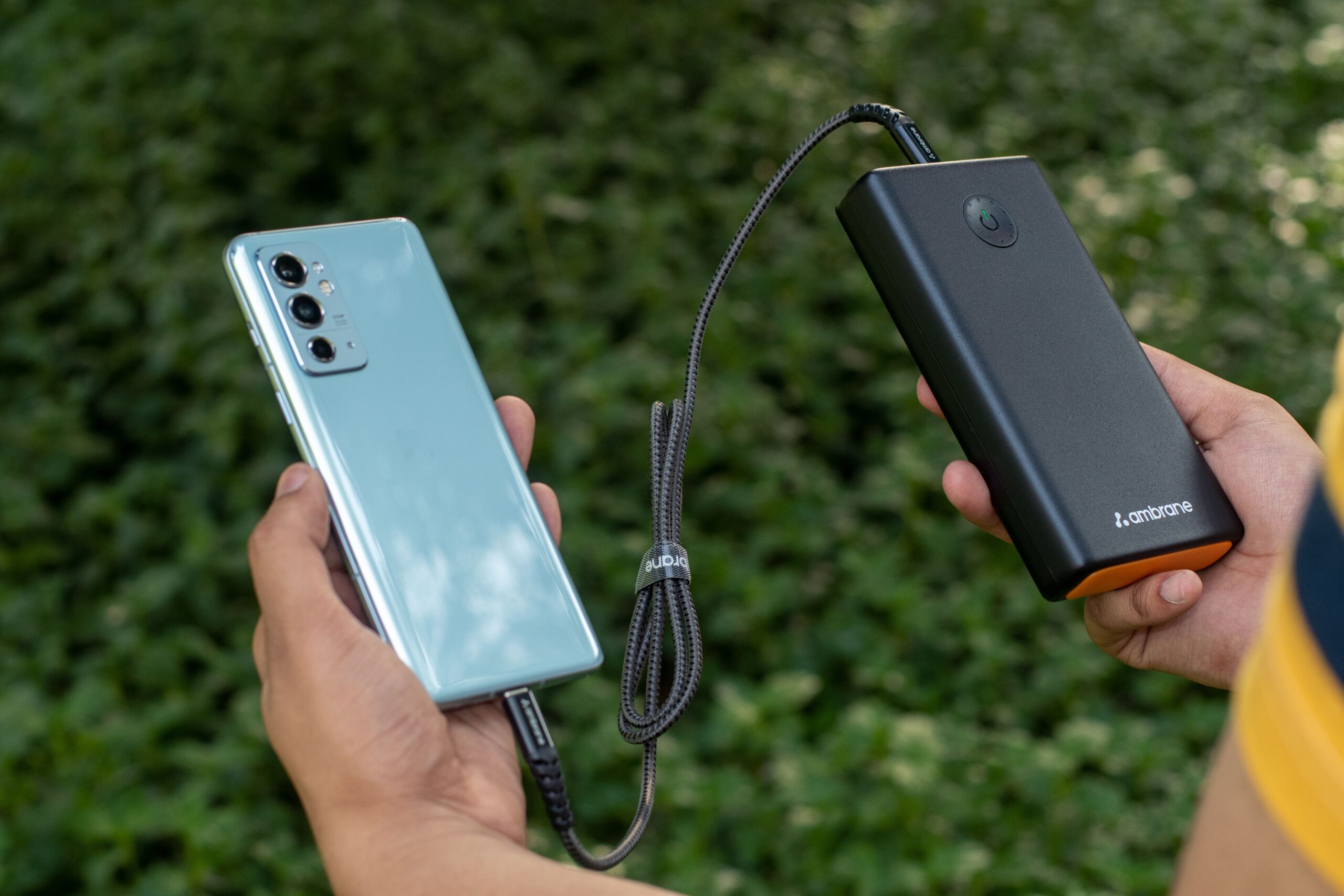
The Nothing Phone (4b) packs a large 6,000mAh battery, which comfortably covers a full day of heavy use — messaging, social media, streaming, and camera use — with room to spare for lighter users to stretch into a second day. Charging tops out at 33W, which is noticeably slower than the fast-charging standards found on some rivals in this bracket, and represents one of the more obvious hardware trade-offs Nothing made to hit this price point. If overnight or top-up charging speed matters a lot to you, it’s worth weighing that against the larger battery capacity, which reduces how often you actually need to reach for the charger in the first place.
Full Specifications at a Glance
| Spec | Nothing Phone (4b) |
|---|---|
| Display | 6.77-inch FHD+ AMOLED, 120Hz, 2,000 nits |
| Chipset | Snapdragon 6 Gen 4 (4nm) |
| RAM | 8GB LPDDR4x |
| Storage | 128GB / 256GB UFS 2.2 |
| Rear Camera | Dual camera with OIS main sensor |
| Battery | 6,000mAh with 33W charging |
| Build | Plastic body, IP64 rated, Glyph Bar (45 LEDs) |
| Software | Android 16, Nothing OS 4.1, 3 years OS + 6 years security updates |
| Colors | Black, White, Blue |
| Starting Price (India) | ₹31,797 (August 2026) |
Nothing Phone 4b vs Nothing Phone 4a: Which Should You Buy?
The Phone (4a), now priced at ₹39,999, uses a premium glass unibody build instead of plastic and generally offers a step up in overall polish, but the price gap between the two has widened as the 4a has moved further upmarket due to component costs. If budget is your primary constraint and you don’t specifically care about the glass build, the Phone (4b) delivers most of the same everyday experience — display quality, Glyph interface, and software support — for roughly ₹8,000 less. If build material and slightly stronger overall specs matter more to you than price, the 4a remains the better all-round device.
Nothing Phone 4b vs Rivals: Galaxy A56 and OnePlus Nord 5
In the ₹30,000–₹35,000 bracket, the Phone (4b) competes most directly against Samsung’s Galaxy A-series and OnePlus’s Nord line. Its biggest differentiators are design (nothing else in this price range looks remotely like it) and software support length, which genuinely outpaces most competitors at this price. Where it’s likely to lose ground is raw performance and charging speed, since some rivals pack faster-charging standards and, in certain configurations, more RAM. If design individuality and long-term software support matter more to you than winning benchmark comparisons, the Phone (4b) is a strong pick; if raw specs-per-rupee is your main criterion, it’s worth cross-shopping before you commit.
Pros and Cons
What We Like
- Distinctive transparent design with an upgraded, brighter Glyph Bar
- Large 6,000mAh battery for genuinely all-day (or longer) use
- OIS on the main camera, uncommon at this price point
- Strong software support commitment — 3 years OS, 6 years security updates
- Price has actually dropped since launch, unlike most 2026 flagships
What Could Be Better
- 33W charging feels slow next to rivals offering 65-100W
- Plastic build instead of the glass unibody on the pricier Phone (4a)
- 8GB RAM is fixed across both variants, with no higher-RAM option
- Snapdragon 6 Gen 4 isn’t built for heavy gaming at maxed-out settings
- Dual rear camera setup is more basic than some triple-camera rivals
Who Should Buy the Nothing Phone 4b?
The Phone (4b) makes the most sense for buyers who want a phone that looks and feels different from the sea of near-identical Android slabs, without paying flagship prices to get there. It’s also a strong pick for anyone who values long-term software support over raw specs, since Nothing’s update commitment here genuinely outlasts most rivals in this bracket. If you’re a heavy mobile gamer chasing maximum frame rates, or if ultra-fast charging is non-negotiable for your daily routine, you’ll likely be better served by a rival with a more performance-focused chipset or a faster charging standard.
Availability and Where to Buy
The Nothing Phone (4b) is sold through Flipkart, Croma, Reliance Digital, Vijay Sales, and Nothing’s own online store and flagship retail location in Bengaluru. As with most phones in this segment, the best real-world pricing tends to show up during major sale events — Flipkart’s Big Billion Days, Amazon’s Great Indian Festival, and Diwali season offers have historically brought meaningful additional discounts, bank cashback, and exchange bonuses on top of the listed price.
Gaming and Everyday App Performance
In day-to-day use, the Snapdragon 6 Gen 4 handles the things most people actually do on their phone — messaging apps, social media, streaming video, camera use, and casual browsing — without any noticeable stutter, helped along by the 120Hz display and fast 1,000Hz touch sampling. Where it shows its limits is in graphically demanding games at the highest settings; titles like BGMI and Genshin Impact run, but you’ll likely need to drop a setting or two below maximum to keep frame rates consistently smooth during longer sessions. If mobile gaming is a bigger priority for you than it is for the average buyer, it’s worth checking our coverage of the BGMI 4.6 update to see what kind of performance the newest update actually demands from the hardware before you commit to this chipset tier.
The vapour chamber cooling system does help here — thermal throttling during extended sessions is noticeably better controlled than you’d expect from a phone at this price, even if the raw compute ceiling is lower than pricier flagships.
Build Quality and In-Hand Feel
Switching from glass to a plastic back panel is the kind of change that sounds like a downgrade on paper but works out reasonably well in practice. The plastic construction is noticeably lighter than the Phone (4a) Pro’s glass unibody, makes the phone feel less fragile day-to-day, and — perhaps counterintuitively — tends to survive accidental drops better than glass-backed rivals, since there’s no risk of a shattered rear panel. The transparent design element is still visible through the plastic, so you don’t lose the visual identity that makes Nothing phones instantly recognizable; you’re trading some premium tactile feel for practicality, which is a fair exchange at this price point.
Security and Setting Up Your New Phone
As with any new Android device, setting up a Nothing Phone (4b) is a good moment to review your digital security habits rather than just restoring your old backup and moving on. Nothing OS supports standard Android security features like fingerprint unlock and app-level permissions, but the accounts and passwords you carry over are just as important as the hardware itself. If you’re starting fresh on a new device, our comparison of the best password manager apps in 2026 is a useful companion read before you sign back into your email, banking, and social accounts on the new phone.
EMI and Exchange Offers
Given the ₹30,000-plus starting price, many buyers opt to finance the Nothing Phone (4b) rather than paying upfront. EMI options through major bank credit cards and platforms like Bajaj Finance are commonly available on both Flipkart and Nothing’s own store, typically bringing monthly payments down to a few thousand rupees depending on tenure. Exchange offers for an older phone can also meaningfully reduce the effective price — Flipkart and Amazon both regularly run exchange bonus promotions that stack on top of instant bank discounts, so it’s worth checking the effective price after trade-in rather than comparing only the sticker price across retailers.
Real-World Camera Quality: What to Expect
Photo quality from the OIS-equipped main sensor is genuinely solid in daylight, with accurate colors and good dynamic range for a phone in this bracket — Nothing hasn’t historically over-processed its images the way some competitors do, and the Phone (4b) continues that restrained, natural-looking approach. Low-light performance is respectable rather than exceptional; the OIS helps steady handheld night shots, but detail retention in very dark scenes falls a step behind what you’d get from a true flagship’s larger sensor and more aggressive computational photography pipeline. Video recording tops out at a resolution and stabilization level that’s fine for casual use and social sharing, though it isn’t the phone’s primary strength the way the display and design are.
The dual-view recording mode and the India-exclusive Cricket camera preset are the kind of software additions that won’t matter to every buyer, but they’re a good example of Nothing tailoring the software experience to the Indian market specifically rather than shipping an identical global build, which is a meaningful signal about how seriously the brand is investing in India as a market rather than treating it as an afterthought.
Should You Buy the Nothing Phone 4b Now or Wait?
Unlike most 2026 flagship launches, where waiting has historically meant paying more due to the ongoing memory shortage, the Phone (4b)’s price trend has actually moved in the opposite direction — dropping about 6% within a month of launch during the Flipkart Freedom Sale. That makes it one of the rare phones where buying during an active sale period, rather than at launch, genuinely gets you a better deal rather than just a marketing discount on an inflated price. If you can hold off for the next major sale event, it’s worth doing so; if you need a phone right now, current pricing is already close to what you’d likely get during a sale anyway.
Frequently Asked Questions
What is the Nothing Phone 4b price in India right now?
As of August 2026, the Nothing Phone (4b) starts at ₹31,797 for the 8GB+128GB variant in India, down from its launch price of ₹34,999.
What chipset does the Nothing Phone 4b use?
It uses a 4nm octa-core Snapdragon 6 Gen 4 chipset from Qualcomm, paired with an Adreno 810 GPU and 8GB of LPDDR4x RAM.
How big is the Nothing Phone 4b’s battery?
The Phone (4b) has a 6,000mAh battery with 33W wired charging support.
Is the Nothing Phone 4b waterproof?
It carries an IP64 rating, which protects against dust and light water splashes, but it is not rated for full submersion like some flagship phones.
How long will the Nothing Phone 4b receive software updates?
Nothing has committed to three years of major Android OS upgrades and six years of security updates for the Phone (4b).
Is the Nothing Phone 4b better than the Nothing Phone 4a?
The Phone (4a) has a premium glass unibody build and sits a notch higher overall, but costs roughly ₹8,000 more. The Phone (4b) delivers a very similar everyday experience — display, Glyph interface, and software support — for meaningfully less money.
What colors does the Nothing Phone 4b come in?
The Nothing Phone (4b) is available in Black, White, and Blue in the Indian market.
Does the Nothing Phone 4b support fast charging?
Yes, but at 33W it charges more slowly than several rivals in the same price bracket that offer 65W or faster charging. The larger 6,000mAh battery partly offsets this by reducing how often you need to charge.
Is the Nothing Phone 4b good for gaming?
It handles everyday apps and casual gaming smoothly, but the Snapdragon 6 Gen 4 chipset is built for general use rather than maxed-out graphics in demanding titles, so heavy gamers may want to drop a setting or two for the smoothest experience.
Final Verdict
The Nothing Phone (4b) is a rare example of a mid-range phone that doesn’t feel like a compromise disguised as a “value pick.” The design still turns heads, the display specs punch above the price bracket, and the software support commitment is genuinely better than most competitors offer at any price. The trade-offs — slower 33W charging, a fixed 8GB of RAM, and a chipset built for everyday use rather than heavy gaming — are honest and clearly telegraphed rather than hidden behind marketing spin. For anyone who wants a phone with actual personality in a market full of interchangeable black rectangles, and who isn’t chasing benchmark scores, the Phone (4b) is one of the easiest recommendations in the ₹30,000–₹35,000 segment right now.