
Quick Answer: The Poco M8 Power price in India starts at ₹24,999 for the 6GB+128GB variant, with the 8GB+128GB model priced at ₹27,999. Launched on August 4, 2026 with sales beginning August 7 exclusively on Flipkart, it features a 6.83-inch 120Hz AMOLED display, a Snapdragon 4 Gen 4 chipset, and a massive 8,000mAh silicon-carbon battery that Poco claims can last up to three days. This guide covers full pricing, specs, and how it compares to its closest rival — the nearly identical Redmi Note 17.
If you’ve been searching for the Poco M8 Power price in India, you’re looking at one of the standout budget launches of August 2026. Poco’s M-series has always focused on doing the essentials well without unnecessary extras, and the M8 Power leans into that harder than any recent Poco phone — built almost entirely around one headline feature: an oversized battery that promises genuinely multi-day use. Here’s everything you need to know before buying.
Poco M8 Power Price in India (August 2026)
Poco officially launched the M8 Power in India on August 4, 2026, with sales beginning August 7 exclusively through Flipkart.
| Variant | Launch Price | Effective Price with Bank Offer |
|---|---|---|
| 6GB RAM + 128GB Storage | ₹24,999 | ₹21,999 |
| 8GB RAM + 128GB Storage | ₹27,999 | ₹24,999 |
Poco is throwing in an instant bank discount worth ₹3,000 on top of the listed price, bringing the effective starting cost down to ₹21,999 during the launch period. If you’re weighing this against other options in a similar price range, our roundup of the best budget smartphones under ₹20,000 and the pricier best smartphones to buy in 2026 guide are useful references for where the M8 Power sits in the broader market.
Design and Build
The M8 Power ships in Black, Blaze Orange, and Green colour options, with a plastic back panel and a wide horizontal camera bar running across the rear that houses two circular camera cutouts and the Poco logo — a design language that’s drawn comparisons to recent iPhone camera layouts. Despite packing an 8,000mAh battery, Poco has kept the phone surprisingly manageable at just over 8.4mm thick and around 220 grams, which is a genuinely impressive engineering feat given the cell size involved. The phone carries an IP65 rating for dust and water resistance, a step up from the IP64 rating common on many rivals in this price bracket.
Display Specifications
- Size: 6.83-inch Full-HD+ AMOLED
- Refresh rate: 120Hz
- Peak brightness: Up to 1,800 nits
- Dimming: 960Hz PWM dimming for reduced eye strain in low light
- Color coverage: Full DCI-P3 colour range, as claimed by Poco
- Protection: Corning Gorilla Glass 7i
These are genuinely strong numbers for a phone at this price — the combination of AMOLED quality, high peak brightness, and premium glass protection typically shows up on pricier devices, making the display one of the M8 Power’s clearest strengths.
Performance: Snapdragon 4 Gen 4
The Poco M8 Power runs on a Qualcomm Snapdragon 4 Gen 4 chipset, paired with 6GB or 8GB of RAM and 128GB of storage. This is an entry-to-mid-range chipset built for reliable everyday use — messaging, social media, streaming, and casual gaming — rather than chart-topping benchmark performance. It’s the same chipset found in the Redmi Note 17, which makes sense given how closely related the two devices are under the hood.
Battery and Charging: The Headline Feature
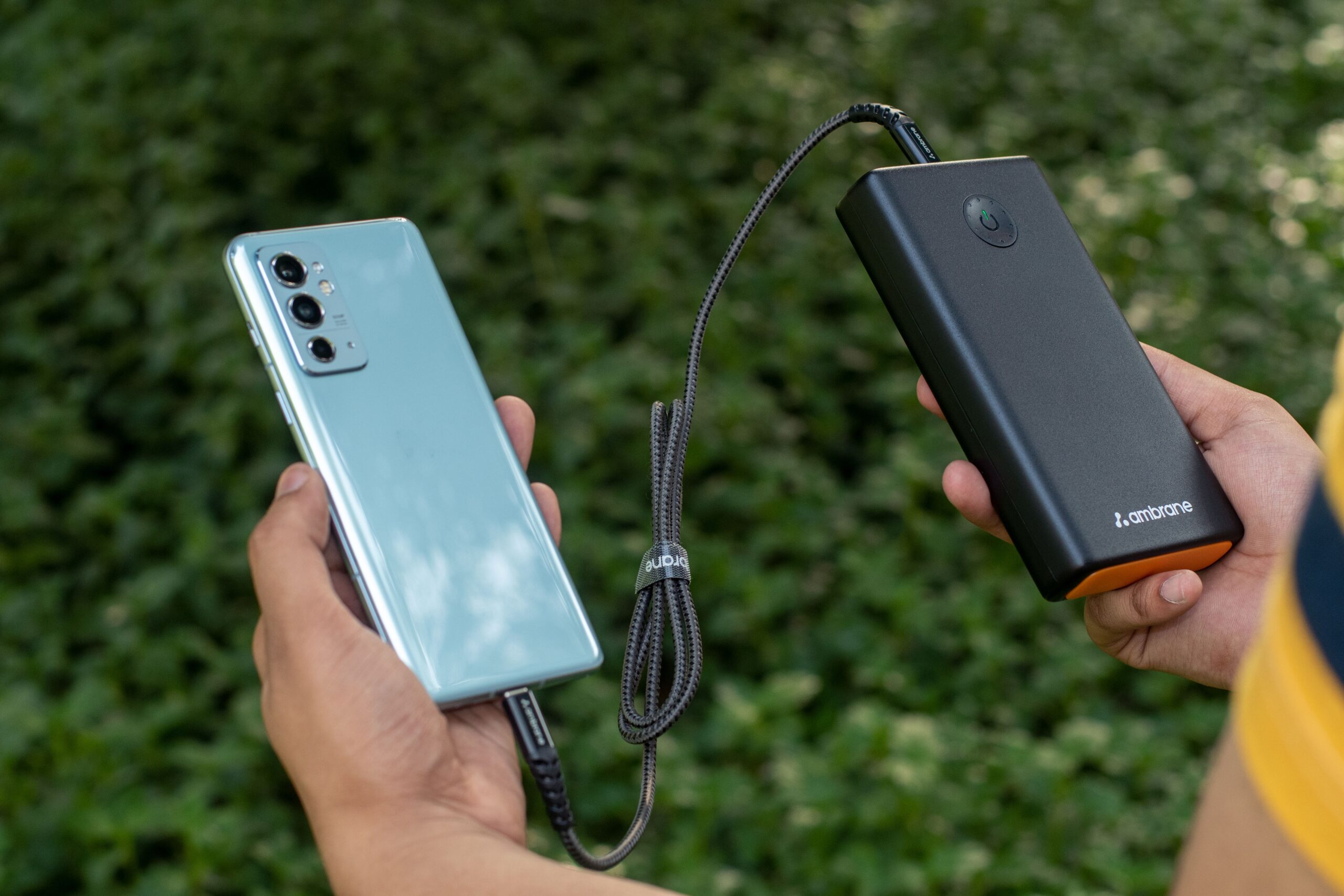
The 8,000mAh silicon-carbon battery is unambiguously the reason to buy this phone. Poco claims it can deliver up to three days of use for moderate users, and even heavy users combining camera use, streaming, and social media should comfortably clear a full day with room to spare. Charging is handled via 45W wired fast charging, and the phone also supports 22.5W reverse wired charging, letting it function as an emergency power bank for earbuds, another phone, or small accessories.
The engineering trade-off for packing in a cell this large without making the phone feel like a brick is genuinely impressive — Poco has managed to keep the M8 Power close to the thickness and weight of phones with considerably smaller batteries, though it’s still noticeably chunkier than slimmer rivals.
Camera
The M8 Power uses a 50MP+2MP dual rear camera setup with LED flash, and an 8MP front camera for selfies and video calls. This is a fairly standard configuration for the price bracket — solid daylight photography from the main sensor, with the secondary 2MP lens adding limited additional capability rather than meaningful versatility. Buyers specifically prioritizing camera flexibility or an ultrawide lens should note this isn’t the M8 Power’s strongest area; the phone’s design priorities clearly sit with battery and display rather than photography.
Full Specifications at a Glance
| Spec | Poco M8 Power |
|---|---|
| Display | 6.83-inch AMOLED, 120Hz, 1,800 nits |
| Chipset | Snapdragon 4 Gen 4 |
| RAM | 6GB / 8GB |
| Storage | 128GB |
| Rear Camera | 50MP + 2MP |
| Front Camera | 8MP |
| Battery | 8,000mAh silicon-carbon, 45W charging |
| Build | ~8.4mm thick, ~220g, IP65 rated, Gorilla Glass 7i |
| Software | Android 16, HyperOS 3, 4 years OS + 6 years security updates |
| Colors | Black, Blaze Orange, Green |
| Starting Price (India) | ₹24,999 |
Poco M8 Power vs Redmi Note 17: What’s the Difference?
If you’ve read our coverage of the Redmi Note 17, the M8 Power will feel immediately familiar — and that’s not a coincidence. Both phones share the same Snapdragon 4 Gen 4 chipset, a similarly sized 8,000mAh battery, and comparable AMOLED displays, reflecting Xiaomi’s practice of rebranding closely related hardware across its Redmi and Poco sub-brands for the Indian market. The most meaningful differences come down to price and minor design choices: the M8 Power starts slightly lower at ₹24,999 versus the Redmi Note 17’s ₹27,999, and carries a higher IP65 rating compared to the Note 17’s IP64. For most buyers, the decision between these two will come down to brand preference and whichever is running the better promotional discount at the time of purchase, rather than any dramatic difference in the actual ownership experience.
Poco M8 Power vs Nothing Phone 4b
Against the Nothing Phone 4b, the M8 Power wins clearly on battery capacity and charging flexibility, but loses ground on design distinctiveness and camera quality — the Phone 4b’s OIS-equipped main sensor is a genuine advantage for anyone who prioritizes photography. If all-day-plus battery life and screen size are your main concerns, the M8 Power is the stronger pick; if a standout design and better photos matter more, the Phone 4b remains competitive at a similar price point.
Pros and Cons
What We Like
- Massive 8,000mAh battery genuinely capable of multi-day use
- Bright, high-quality 6.83-inch AMOLED display for the price
- Strong software support commitment — 4 years OS, 6 years security updates
- Surprisingly manageable thickness and weight for the battery size
- IP65 rating, stronger than many rivals in this bracket
What Could Be Better
- Basic dual-camera setup without an ultrawide lens
- Plastic build rather than glass, though this aids durability
- Snapdragon 4 Gen 4 isn’t built for demanding gaming at high settings
- Nearly identical to the Redmi Note 17, offering limited differentiation within Xiaomi’s own lineup
- Exclusive to Flipkart at launch, limiting purchase options
Who Should Buy the Poco M8 Power?
This phone is aimed squarely at buyers who prioritize battery life above nearly everything else — heavy phone users, people who travel frequently without reliable charging access, and anyone tired of charging their phone multiple times a day. It’s also a strong pick for buyers who want AMOLED display quality without paying flagship prices. If camera flexibility, a slimmer in-hand feel, or brand loyalty to Redmi over Poco matter more to you, it’s worth comparing directly against the Redmi Note 17 before deciding, since the two phones are close enough in hardware that price and minor preferences will likely be the deciding factor.
EMI and Exchange Options
Given the starting price above ₹20,000, EMI options through Flipkart’s partner banks and Bajaj Finance are commonly available, with monthly payments typically starting from a few hundred rupees depending on tenure and down payment. Exchange offers on an older phone can also meaningfully reduce the effective price, and it’s worth checking exchange valuations on Flipkart specifically since the M8 Power is currently sold exclusively through that platform.
Gaming and Everyday Performance
In daily use, the Snapdragon 4 Gen 4 comfortably handles messaging, social media, streaming, and casual gaming, aided by the smooth 120Hz AMOLED display. Graphically demanding titles like BGMI or Genshin Impact run, but expect to drop a setting or two below maximum to keep frame rates consistent during longer sessions — this chipset tier is built for reliability and battery efficiency rather than benchmark-topping performance. For most M8 Power buyers, whose priority is clearly long battery life over gaming muscle, this is a sensible trade-off rather than a genuine shortcoming.
Connectivity and Everyday Features
The M8 Power includes dual-band Wi-Fi, Bluetooth, an in-display fingerprint sensor, and USB-C connectivity. Like most Xiaomi-family phones sold in India, it also supports IR blaster functionality, letting it double as a remote for TVs and other appliances — a small but genuinely popular feature among budget phone buyers. The 128GB of fixed internal storage should be sufficient for most users, though heavy photographers and video shooters without expandable storage should plan their media management accordingly.
Setting Up Your New Phone
Whenever you switch to a new device, it’s worth taking a few minutes to review your account security rather than simply restoring an old backup. This is particularly relevant for a phone you’re likely to keep for several years given its strong software update commitment — the accounts and passwords you carry over matter as much as the hardware itself. Our comparison of the best password manager apps in 2026 is a useful companion read if you’re setting up a fresh device and want to tidy up your logins at the same time.
Should You Buy Now or Wait?
Since the M8 Power has only just launched, prices are unlikely to drop significantly in the short term, though the ₹3,000 bank card discount currently available is worth taking advantage of if you have an eligible card. Watch for additional exchange bonuses and discounts during major sale events later in the year, which have historically brought further price cuts on Poco devices a few months post-launch. If your current phone’s battery life is the main pain point, there’s little reason to wait — that’s exactly the problem this phone was built to solve.
Real-World Camera Quality: What to Expect
Daylight photos from the 50MP main sensor are solid for the price — accurate colors and reasonable detail in good lighting conditions, consistent with what Xiaomi-family phones typically deliver at this tier. Low-light performance is average rather than exceptional, with noticeable noise creeping in once light levels drop significantly, and without an ultrawide lens or telephoto option, you’re limited to standard framing and digital zoom for anything beyond the main camera’s natural field of view. Video recording covers the basics well for social media sharing and casual use, though it isn’t a highlight the way the battery and display clearly are. If photography versatility is a bigger priority for you than raw battery life, it’s worth cross-shopping against the Nothing Phone 4b’s OIS-equipped camera setup before settling on the M8 Power specifically for its imaging capabilities.
Build Quality and In-Hand Feel
Given the size of the battery inside, the M8 Power’s in-hand feel is one of its more impressive engineering achievements. At roughly 8.4mm thick and 220 grams, it sits close to what you’d expect from phones carrying a considerably smaller cell, rather than feeling like a dedicated power-bank phone. The plastic build helps here too, keeping overall weight down while adding a practical durability benefit — plastic backs tend to survive accidental drops better than glass, since there’s no risk of a shattered rear panel. The IP65 rating adds genuine peace of mind for accidental spills or use in light rain, a detail that matters more than it might initially seem given how much of India experiences a lengthy monsoon season each year.
Frequently Asked Questions
What is the Poco M8 Power price in India right now?
The Poco M8 Power starts at ₹24,999 for the 6GB+128GB variant, with the 8GB+128GB model priced at ₹27,999. A ₹3,000 bank discount brings effective prices down to ₹21,999 and ₹24,999 respectively.
When did the Poco M8 Power launch in India?
It launched on August 4, 2026, with sales beginning August 7, 2026 exclusively through Flipkart.
What chipset does the Poco M8 Power use?
It uses a Qualcomm Snapdragon 4 Gen 4 chipset, paired with 6GB or 8GB of RAM.
How big is the Poco M8 Power’s battery?
It has an 8,000mAh silicon-carbon battery with 45W wired fast charging and 22.5W reverse wired charging.
Is the Poco M8 Power the same as the Redmi Note 17?
They’re closely related but not identical. Both share the same chipset, similar battery capacity, and comparable displays, but differ in price, IP rating, and minor design details, reflecting Xiaomi’s practice of rebranding hardware across its Redmi and Poco sub-brands.
Does the Poco M8 Power have an ultrawide camera?
No, it uses a 50MP main sensor paired with a basic 2MP secondary lens, without a dedicated ultrawide camera.
What colors does the Poco M8 Power come in?
It’s available in Black, Blaze Orange, and Green.
How long will the Poco M8 Power receive software updates?
Poco has committed to four years of major Android OS updates and six years of security patches for the M8 Power.
Is the Poco M8 Power good for gaming?
It handles casual and moderately demanding games smoothly, but the Snapdragon 4 Gen 4 chipset isn’t built for graphically intensive titles at maximum settings, so heavy mobile gamers may want to look at higher-tier alternatives.
Does the Poco M8 Power support memory card expansion?
The M8 Power ships with a fixed 128GB of internal storage without microSD expansion support, so it’s worth planning storage needs accordingly if you shoot a lot of photos or video.
Final Verdict
The Poco M8 Power delivers exactly what its name promises: a phone built almost entirely around battery life, with a genuinely impressive AMOLED display thrown in as a bonus. The camera setup and overall photography experience are clearly secondary priorities, and buyers who want stronger versatility there should look elsewhere. But for anyone whose biggest phone frustration is running out of charge before the day ends, the M8 Power’s 8,000mAh cell — paired with surprisingly manageable thickness and a strong software update commitment — makes it one of the most straightforward recommendations in its price bracket right now. Just be sure to cross-shop it directly against the nearly identical Redmi Note 17 before buying, since the better deal between the two will likely come down to whichever has the stronger promotional discount at the time.