
Introduction
In today’s fast-moving supply chains, customers and businesses alike expect complete visibility into where their goods are at any given moment. Real-time shipment tracking has moved from being a “nice-to-have” feature to a core requirement for logistics, e-commerce, and manufacturing companies. By using GPS, IoT sensors, and cloud-based platforms, businesses can monitor shipments from the moment they leave the warehouse until they reach the customer’s doorstep.
What Is Real-Time Shipment Tracking?
Real-time shipment tracking refers to the continuous monitoring of a shipment’s location, condition, and status using connected technologies such as GPS trackers, RFID tags, and telematics devices. Unlike traditional tracking methods that update only at fixed checkpoints, real-time systems provide live, minute-by-minute data that both businesses and customers can access instantly.
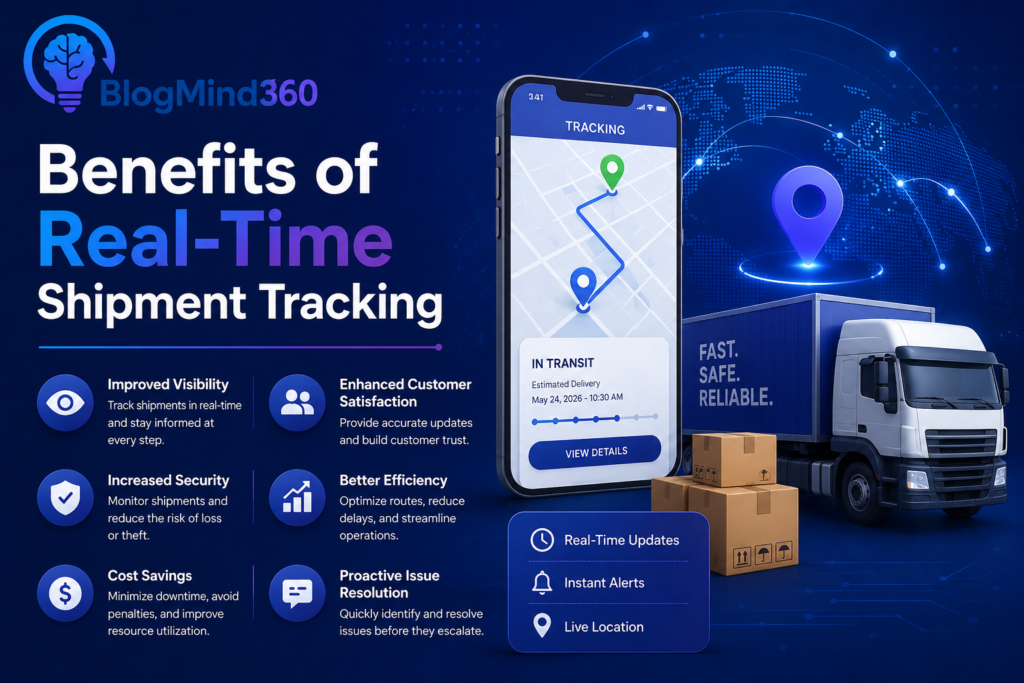
Key Benefits of Real-Time Shipment Tracking
1. Improved Visibility and Transparency
Real-time tracking gives businesses a clear view of their entire supply chain. Instead of waiting for manual updates, logistics teams can see exactly where a shipment is at any point in its journey, helping them make faster, more informed decisions.
2. Enhanced Customer Satisfaction
Customers today expect the same tracking experience they get from major e-commerce platforms. Providing live shipment updates builds trust, reduces “where is my order” support inquiries, and improves the overall buying experience.
3. Reduced Operational Costs
With real-time data, companies can identify inefficient routes, avoid unnecessary delays, and optimize fleet usage. This leads to lower fuel consumption, reduced labor costs, and better resource allocation across the supply chain.
4. Proactive Issue Resolution
When a shipment is delayed or deviates from its planned route, real-time alerts allow logistics teams to respond immediately rather than discovering the problem after it has already affected delivery timelines.
5. Better Inventory and Demand Planning
Accurate, live shipment data helps businesses forecast inventory levels more precisely, reducing the risk of stockouts or overstocking. This is especially valuable for industries with tight delivery windows, such as pharmaceuticals and perishable goods.
6. Increased Security and Reduced Theft
Continuous location monitoring makes it harder for goods to go missing without detection. Many tracking systems also include geofencing alerts that notify teams if a shipment leaves an approved route or area.
7. Stronger Supplier and Partner Accountability
Real-time tracking data creates a transparent record of performance across carriers and suppliers, making it easier to evaluate reliability and enforce service-level agreements.
Industries That Benefit Most
While nearly every industry can benefit from real-time shipment tracking, it delivers especially high value in e-commerce, pharmaceuticals, food and beverage, automotive manufacturing, and cold chain logistics, where timing and condition monitoring are critical to product quality and compliance.
Conclusion
Real-time shipment tracking is no longer optional for businesses that want to stay competitive in a demanding logistics landscape. From improving customer satisfaction to cutting operational costs and strengthening supply chain security, the benefits extend across every level of the business. Companies that invest in real-time tracking technology position themselves for greater efficiency, transparency, and long-term growth.