

Quick Answer: At Meta Connect 2026 on September 23, Meta announced four new pairs of glasses and a new AI gadget. The headliner is Meta VR Glasses, a 100-gram headset with a tethered compute puck, priced at $1,299.99 for spring 2027. Meta also launched the camera-free Ray-Ban Meta Audio ($349, ships October 13), the Ray-Ban Meta Gen 3 ($449, on sale now), and a cheaper Meta Adventurer ($249, October 23). Other news includes a hearing enhancement mode, wider Ray-Ban Display availability at $799, and a keychain AI device called Muse Charm. There was no Quest 4.
Meta Connect 2026 made one thing very clear: Meta now sees glasses, not phones or bulky headsets, as the future of personal computing. Mark Zuckerberg spent the keynote showing off new eyewear at almost every price point, from a $249 entry pair to a $1,300 VR headset that looks more like a chunky pair of sunglasses.
If you are thinking about buying smart glasses this fall, or you just want to know what Meta announced without watching the full keynote, this guide covers everything. You will find every product, its price, its release date, and our take on which one is worth your money.
Meta Connect 2026 at a Glance
Meta held Connect 2026 on Wednesday, September 23, at its Menlo Park campus in California. The keynote focused on wearables and on Muse, the company’s personal AI agent.
Here is every major hardware announcement in one table:
| Product | US Price | Availability | Key Feature |
|---|---|---|---|
| Meta VR Glasses | $1,299.99 | Spring 2027 | 100-gram VR headset with 5K display |
| Ray-Ban Meta Gen 3 | From $449 | On sale now | Slimmer design, 9-hour battery, AI button |
| Ray-Ban Meta Audio | From $349 | Ships October 13 | First Meta glasses with no camera |
| Meta Adventurer | From $249 | October 23 | Cheapest Meta-branded AI glasses |
| Meta Ray-Ban Display | $799 | Order online now (US) | In-lens display, wider rollout |
| Muse Charm | Not announced | Later in 2026 | Keychain device for Meta’s AI agent |
Just as important is what Meta did not show. There was no Quest 4, no second-generation Ray-Ban Display with screens in both lenses, and no consumer version of the Orion AR glasses Meta previewed back in 2024.
Meta VR Glasses: The Headline of Meta Connect 2026
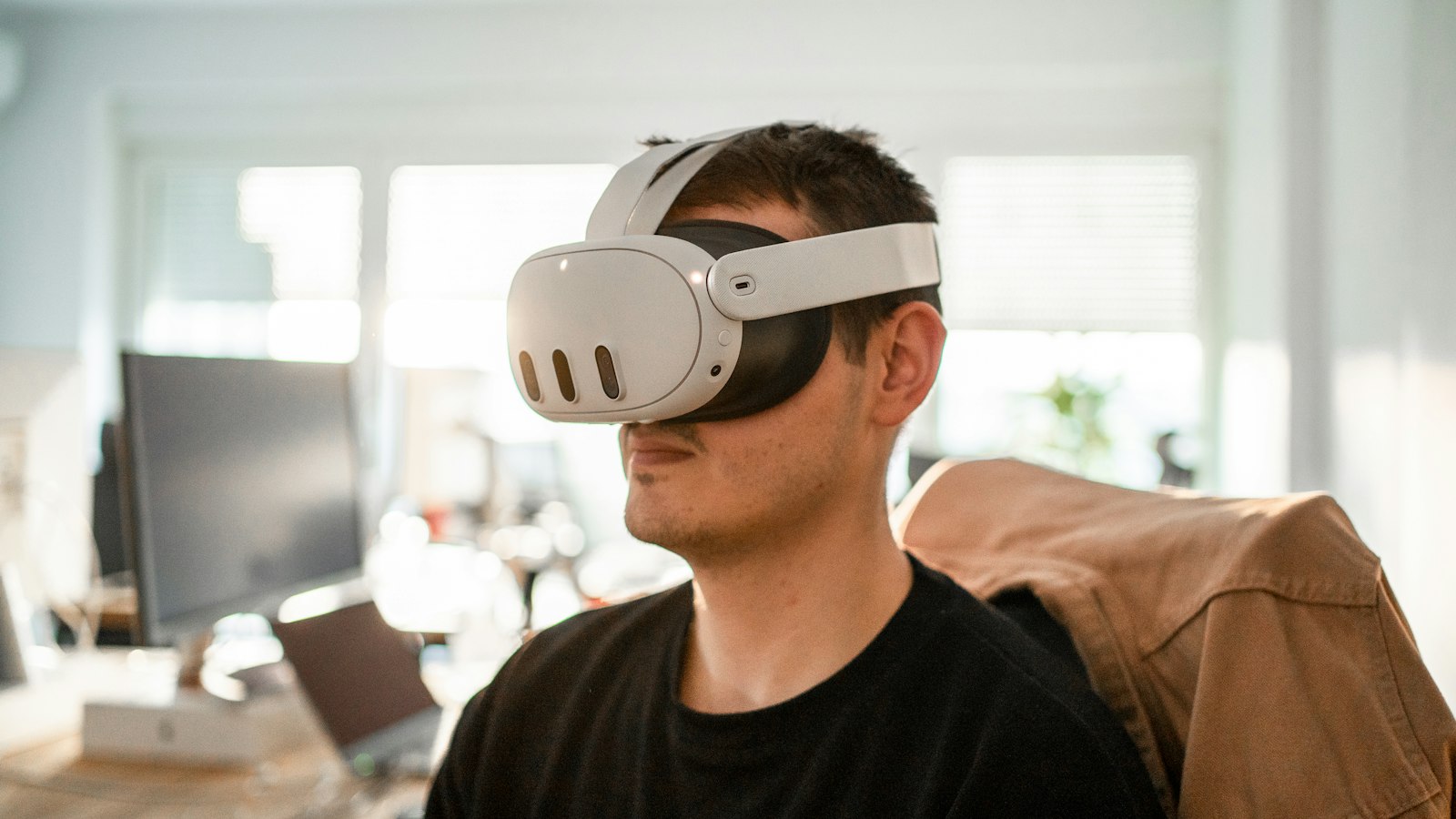
The biggest reveal was Meta VR Glasses, the device that leaks had called Project Phoenix for months. Meta is careful to call it “glasses,” but it is really a very light VR headset.
Design and Weight
Meta VR Glasses weigh about 100 grams. That makes them roughly five times lighter than the Meta Quest 3. The frame uses magnesium alloy and pancake lenses, which let the optics sit much closer to your face than older headset designs.
How did Meta cut so much weight? It moved the heavy parts off your head. The chip, storage, and battery all live in a separate compute puck connected by a cable. You keep the puck in a pocket or bag, much like the battery pack on Apple Vision Pro.
Display and Audio
The glasses use a 5K display with full-color passthrough, so you can see the room around you. Meta promises “cinema-grade” clarity, with support for Dolby Vision and Dolby Atmos spatial audio. Meta also says this is the first VR device to earn IMAX Enhanced certification.
Chip and Battery Life
The puck runs on Qualcomm’s new Snapdragon Reality Elite chipset. Meta says you get up to three hours of continuous high-resolution media playback per charge. The puck also supports 45W fast charging.
Three hours is enough for a movie or a flight segment. It is not enough for a full workday without a top-up, so heavy users should plan around a charger.

Games, Work, and Video Calls
At launch, Meta VR Glasses will support 75 games you can play with hand gestures alone. With Touch Plus controllers, the glasses can run every game in the Quest library. One catch: controllers are not included in the box. You can also stream games through Xbox Cloud Gaming or connect to other gaming devices over Wi-Fi or USB-C.
For work, you can link the glasses to a Windows PC or a Mac and spread out across virtual monitors. Meta says any table can act as a virtual keyboard and touchpad. A real keyboard and mouse work too.
The glasses also support holographic avatars for video calls in apps like WhatsApp and Zoom. People on a normal screen see your hologram, while spatial audio places other callers’ voices around you. You control everything with your voice, your eyes, or hand gestures.
Is Meta VR Glasses Worth $1,299.99?
The price is the biggest surprise. Many fans hoped for something closer to Quest pricing. Instead, Meta landed at $1,299.99, well above the Quest line. Rising chip and memory costs across the tech industry this year likely pushed the price up.
For context, Apple Vision Pro launched at $3,499 in 2024. So Meta’s device is far cheaper than Apple’s, while also being far lighter. However, it is a big step up from a Quest 3S. Unless you watch a lot of movies on the go or want a portable multi-monitor setup, a current Quest headset still offers much better value for pure gaming.
Ray-Ban Meta Gen 3: The Mainstream Pick
The Ray-Ban Meta Gen 3 refreshes Meta’s best-selling smart glasses. They are on sale now, starting at $449.
- Slimmer design: The frames are thinner than the previous generation.
- New Action Button: A physical button triggers Meta AI instantly.
- Better battery: Up to nine hours of use, up from eight.
- Six-mic array: Meta says it removes more than 90 percent of background noise on calls.
- Camera: A 12MP camera that records 3K video. Dolby Atmos spatial audio recording is coming soon.
- Dynamic photos: The glasses can snap several shots at once so you (or Meta AI) can pick the best one.
The Gen 3 comes in 27 frame and lens combinations. New styles include the classic Ray-Ban Aviator and a cat-eye frame called Zena, while the iconic Wayfarer sticks around. A limited Aviator edition in milky beige with brown Transitions lenses starts at $579. There are also new collaborations with Kylie Jenner and Blackpink’s Lisa, starting at $399.
Ray-Ban Meta Audio: Smart Glasses Without a Camera
The most interesting product for everyday buyers may be the Ray-Ban Meta Audio. These are Meta’s first smart glasses with no camera at all.
Why does that matter? Camera glasses have faced a lot of pushback. Critics have called them “spy glasses,” and some venues, offices, and schools ban them. Many people simply do not want to wear a camera on their face, or to be recorded by someone else’s glasses. Meta’s audio-only model removes that worry.
Here is what you get:
- Open-ear speakers for music, podcasts, and calls
- Meta AI voice assistant built in
- Up to 12 hours of battery life, plus up to 48 extra hours from the charging case
- A light 43-gram frame built for all-day wear
- Clubmaster and Burbank styles in 23 color and lens combos
- Prescription lens support
The Ray-Ban Meta Audio costs $349. Pre-orders opened on September 23, and the glasses ship on October 13.
If you have followed the debate over Meta AI glasses privacy, this launch looks like a direct answer to it. You still get the AI assistant, without the camera controversy.
Meta Adventurer and Meta Fury: The Budget Options
Meta is also growing its own-brand Meta Glasses line. The Meta Adventurer now starts at $249 with a black frame, gray lenses, and a plug-in case. Pre-orders are open, and the glasses hit shelves on October 23.
There is also a limited-edition Meta Fury with a clear frame and mirrored lenses. Meta says it will offer more than 100 glasses styles across its brands by the end of the year.
For first-time buyers who want to try AI glasses without spending $400 or more, the Adventurer is the lowest-risk entry point in Meta’s lineup.
Meta Ray-Ban Display: Wider Rollout and New Features
The Meta Ray-Ban Display, Meta’s glasses with a small screen built into one lens, got two kinds of news.
Availability and Pricing
- United States: Now available to order online for $799.
- United Kingdom: On sale now for £749.
- Canada: On sale now for CA$1,149.
- Germany, France, and Italy: Pre-orders open now at €899, with availability on October 13.
New Features
- Better navigation: Cycling and public transit directions are coming to the US and Canada. The glasses can also tell you to turn at a visible landmark, instead of reading out street names.
- Holographic video calls: Support starts with WhatsApp calls in the US this fall. You will need to scan yourself in the Meta AI app to create your avatar.
- Web apps: A new Explore app brings lightweight web apps to the display.
- More tools: On-display photo editing, Dolby Atmos video capture, and phone notifications mirrored to the lens.
Hearing Enhancement: The Sleeper Hit
One of the most useful announcements got less stage time. Meta is adding a hearing enhancement feature to its glasses.
This is not a replacement for a medical hearing aid. It is designed for people who hear fine most of the time but struggle to follow conversations in loud places, like restaurants or bars.
Setup works much like the hearing feature on Apple’s AirPods. You sit in a quiet room and listen to a series of tones, and the glasses tune themselves to your ears. To turn it on, you say, “Hey Meta, start hearing enhancement.”
- Availability: US only, later this year. It arrives first on Meta Glasses, and later on Ray-Ban Meta Gen 3 and Ray-Ban Meta Audio.
- Price: A 30-day free trial, then a one-time $149 fee. It is also included with a Meta One subscription.
- FSA and HSA: Meta says the feature qualifies for FSA and HSA reimbursement.
For many buyers, this could be a better reason to own smart glasses than the AI assistant itself.
Muse and Muse Charm: Meta’s AI Agent Goes Everywhere
On the software side, the star of Meta Connect 2026 was Muse, Meta’s personal AI agent. Meta says Muse is coming to its glasses, but it did not give a date or a full list of supported models.
At the very end of the keynote, Zuckerberg teased Muse Charm. It is a small keychain gadget that looks a bit like a Tamagotchi. It has a small display, speakers, microphones, and a fingerprint sensor. Zuckerberg said it packs the full Muse experience, including real-time voice and avatar features, into something that is always ready to talk.
Meta shared no price and few specs. The company says more details will come later in 2026.
Muse Charm shows how hard the big tech companies are pushing AI into dedicated devices. Apple faces similar pressure, as we covered in our look at the Apple September 2026 event.
VR Games Announced at Meta Connect 2026
Gamers got plenty of news too:
- Beat Saber: Its biggest update ever arrives this spring. It adds hand tracking, so controllers become optional. A new single-player mode called Flux launches with 35 songs.
- Supernatural: The VR fitness app returns to the Meta Horizon Store this fall under a newly independent team. Your points, streaks, and badges carry over.
- Payday: Aces High: The heist game comes to Quest 3 and 3S later this year with PC VR crossplay. An open playtest starts October 19.
- Tetris Effect: A mixed reality version with hand tracking comes to Meta VR Glasses next year.
- Two Point Hospital: Coming to Quest 3 and 3S with hand tracking.
- Phoenix Wright: Ace Attorney Dual Destinies VR: Comes to Meta VR Glasses and Quest next year. You can point at witnesses and shout “objection!”
Movies, Sports, and Streaming
Meta clearly wants its VR Glasses to be a portable movie theater. Key entertainment news includes:
- Disney+ in 3D: Titles like The Avengers and Black Panther stream in 3D starting in November in certain countries.
- Disney Immersive Cinema by ILM: A new app arrives next spring with “VR Enhanced” versions of films like Avengers: Infinity War and Star Wars: A New Hope.
- Open Season: A docuseries following NBA star Draymond Green’s therapy sessions debuts in the Meta Quest TV app on September 29.
- Immersive sports: ESPN will offer 8K, 180-degree immersive streams, starting with college football this year.
- Live events: Meta VR Glasses owners can watch more than 100 live sports events each year through deals with MLB, NBC Sports, TNT Sports, and UFC.
Streaming apps already on board include Prime Video, YouTube, DIRECTV, AMC+, Crunchyroll, Plex, and Tubi. Peacock, HBO Max, and Paramount+ will offer 3D titles.
What Meta Did Not Announce
Some fans left disappointed. Here is what was missing from Meta Connect 2026:
- No Quest 4: Meta VR Glasses is a new product line, not a Quest replacement. Quest 4 is still expected on Meta’s 2027 roadmap.
- No Ray-Ban Display 2: The rumored model with screens in both lenses did not appear.
- No consumer Orion: Meta’s true AR glasses remain a prototype.
- No Muse Charm price: Meta showed the device but held back pricing and specs.
Privacy Questions Around Meta’s New Glasses
Every Meta wearable launch comes with privacy questions, and this year is no different. Camera glasses can record people who never agreed to it. AI assistants that are “always ready to talk” raise questions about what gets recorded and stored.
Meta’s camera-free Audio model and the physical AI button on Gen 3 are steps toward easing those concerns. Still, rules about recording and biometric data differ widely across the country. Some states, like Illinois, have strict biometric privacy laws, while others offer little protection. Our guide to US state privacy laws in 2026 explains how protection changes depending on where you live.
Parents should also think twice before handing VR hardware to kids. Meta headsets have age limits and parental supervision tools, and our guide to the best parental control apps covers extra ways to manage screen time across devices.
Which Meta Glasses Should You Buy?
With so many options, here is a simple guide based on what you need.
Buy Ray-Ban Meta Gen 3 If…
You want the full smart glasses experience: photos, video, calls, music, and Meta AI in one stylish frame. It is the best all-rounder, and you can buy it today.
Buy Ray-Ban Meta Audio If…
You want AI and audio but do not want a camera. It is also the smartest pick for offices, schools, gyms, or anywhere that bans camera glasses. At $349 with 12-hour battery life, it is great value.
Buy Meta Adventurer If…
You are curious about AI glasses but do not want to spend much. At $249, it is the cheapest way into Meta’s ecosystem.
Buy Meta Ray-Ban Display If…
You want to see information, like directions and messages, right in your lens. At $799, it is for early adopters who want the most advanced glasses Meta sells today.
Wait for Meta VR Glasses If…
You want a light, portable screen for movies, travel, and multi-monitor work, and $1,299.99 fits your budget. Since it does not ship until spring 2027, wait for hands-on reviews before you commit.
Key Takeaways
- Meta Connect 2026 took place on September 23 and focused on glasses and the Muse AI agent.
- Meta VR Glasses weigh about 100 grams, use a tethered compute puck, and cost $1,299.99 in spring 2027.
- Ray-Ban Meta Gen 3 costs $449 and is on sale now with a slimmer design and 9-hour battery.
- Ray-Ban Meta Audio is Meta’s first camera-free pair at $349, shipping October 13.
- Meta Adventurer drops to $249 and arrives October 23.
- Ray-Ban Display is now orderable online in the US for $799 and is expanding to more countries.
- A new hearing enhancement mode costs $149 after a 30-day trial and is FSA/HSA eligible.
- Meta did not announce a Quest 4, Ray-Ban Display 2, or consumer Orion glasses.
Frequently Asked Questions
When was Meta Connect 2026?
Meta Connect 2026 was held on Wednesday, September 23, 2026, at Meta’s campus in Menlo Park, California. Mark Zuckerberg delivered the keynote.
What was announced at Meta Connect 2026?
Meta announced Meta VR Glasses, Ray-Ban Meta Gen 3, Ray-Ban Meta Audio, a cheaper Meta Adventurer, wider Ray-Ban Display availability, a hearing enhancement feature, the Muse Charm AI device, and new VR games and streaming content.
How much do Meta VR Glasses cost?
Meta VR Glasses cost $1,299.99 in the US. Controllers are not included.
When do Meta VR Glasses come out?
Meta says Meta VR Glasses will go on sale in spring 2027.
Did Meta announce the Quest 4?
No. Meta did not announce a Quest 4 at Connect 2026. Meta VR Glasses is a separate product line.
Do the Ray-Ban Meta Audio glasses have a camera?
No. Ray-Ban Meta Audio is Meta’s first pair of smart glasses without a camera. It focuses on audio, calls, and the Meta AI voice assistant.
How much are the Ray-Ban Meta Gen 3 glasses?
Ray-Ban Meta Gen 3 starts at $449 and is available now. Special editions range from $399 for celebrity collaborations to $579 for a limited Aviator model.
What is Meta Muse Charm?
Muse Charm is a small keychain device that runs Meta’s Muse AI agent. It has a display, speakers, microphones, and a fingerprint sensor. Meta has not announced its price or release date beyond “later in 2026.”
Final Verdict
Meta Connect 2026 was Meta’s clearest statement yet that glasses are its main bet for the next era of computing. The Ray-Ban Meta Audio and the hearing enhancement feature are the most practical launches, because they solve real problems without the privacy baggage of cameras. The Gen 3 is a solid upgrade for the mainstream. The Meta VR Glasses are the most exciting product on paper, but their $1,299.99 price and 2027 release date mean most people should wait for reviews.
For full hands-on details, Engadget’s roundup of Meta Connect 2026 is a helpful companion read. We will update this guide as Meta shares Muse Charm pricing and final VR Glasses details.