Last updated August 2026
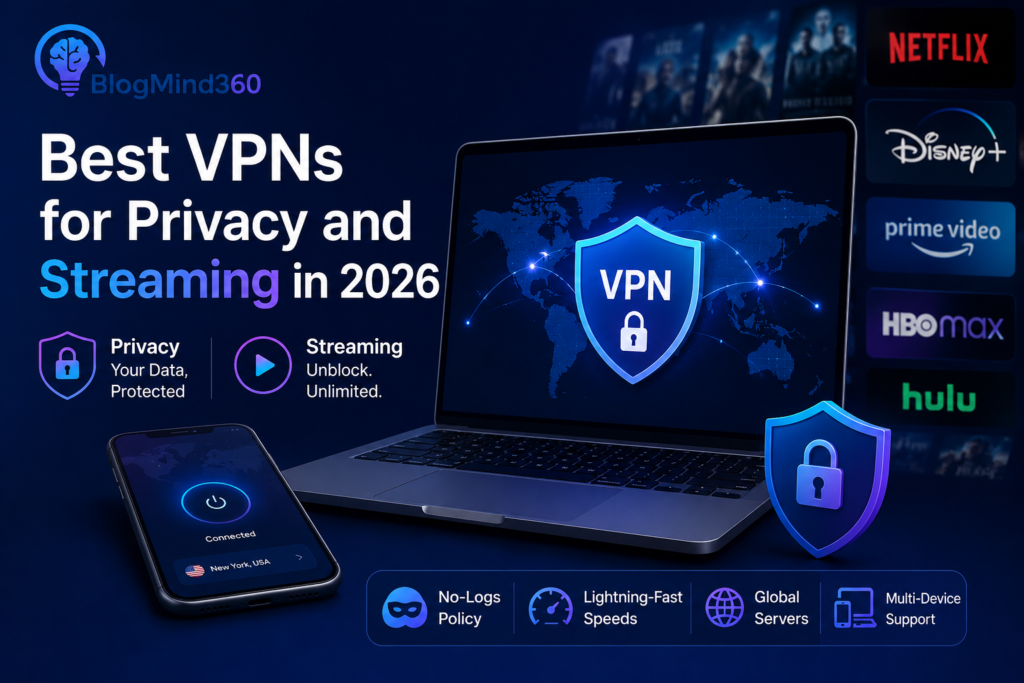
VPN services have grown in popularity for both privacy protection and accessing region-specific streaming content, but not all VPNs are built with the same priorities in mind. This guide explains what actually matters when choosing a VPN in 2026, depending on whether your primary goal is privacy or streaming access.
What a VPN Actually Does
A VPN encrypts your internet traffic and routes it through a server operated by the VPN provider, which hides your actual IP address and location from websites and services you connect to, and protects your traffic from being easily monitored on public or untrusted networks like coffee shop Wi-Fi. It’s important to understand that a VPN shifts trust from your internet provider to the VPN provider, rather than eliminating the need to trust anyone with your traffic entirely.
What Matters for Privacy-Focused Use
For privacy-focused users, the most important factor is a VPN provider’s logging policy — specifically, whether they genuinely don’t retain records of your browsing activity, ideally verified through independent security audits rather than just a company’s own claims. Strong encryption standards, a clear jurisdiction with privacy-friendly laws, and a proven track record without past data breaches or misuse scandals are also important considerations.
What Matters for Streaming Access
For users primarily interested in accessing region-specific streaming content, server speed and the sheer number of server locations available become more important than the deepest privacy guarantees, since accessing smooth, buffer-free streaming requires solid connection speeds. It’s worth noting that many streaming services actively work to detect and block VPN traffic, so reliability at consistently accessing specific streaming platforms can vary and change over time. For specific provider recommendations and a free-vs-paid breakdown for streaming, see our dedicated guide: Best VPN for Streaming 2026 (Free & Paid).
Free vs Paid VPNs
Free VPN services often come with meaningful trade-offs — slower speeds, data caps, fewer server options, and in some cases, business models that involve collecting and monetizing user data, which runs counter to the privacy protection many users seek from a VPN in the first place. Reputable paid VPN services generally offer significantly better performance and more trustworthy privacy practices, making the subscription cost a reasonable trade-off for users with genuine privacy or streaming needs.
Legal and Ethical Considerations
VPN legality varies by country, with most regions allowing VPN use freely, though a smaller number of countries restrict or heavily regulate VPN usage. It’s also worth understanding that using a VPN to access region-restricted streaming content may violate a specific streaming service’s terms of service, even where using a VPN itself is legal, so it’s worth being aware of this distinction.
Frequently Asked Questions
Does a VPN make me completely anonymous online?
No — a VPN significantly improves privacy by hiding your IP address and encrypting traffic, but complete anonymity also requires additional practices like avoiding logging into personal accounts and being mindful of other tracking methods like browser fingerprinting.
Will a VPN slow down my internet connection?
Some speed reduction is common due to the encryption and rerouting process, though reputable paid VPNs with well-maintained server networks generally keep this impact minimal for most everyday browsing and streaming.
Is it legal to use a VPN?
VPN use is legal in most countries, though a smaller number of countries restrict or heavily regulate VPN usage, so it’s worth checking local laws if you’re uncertain about your specific region.
Can I use a VPN on my phone as well as my computer?
Yes — most reputable VPN providers offer apps for both mobile devices and computers, often allowing a single subscription to cover multiple devices simultaneously.
Do streaming services block VPN traffic?
Many streaming services actively try to detect and block VPN usage to enforce regional content licensing agreements, so VPN reliability for accessing specific streaming platforms can vary over time.
How do I verify a VPN’s no-logging claims are actually true?
Look for VPN providers that have undergone independent, third-party security audits specifically verifying their no-logging policies.
Conclusion
Choosing the right VPN in 2026 depends on whether your priority is strong privacy protection or reliable streaming access, since these goals sometimes call for slightly different provider strengths. In either case, opting for a reputable, independently audited paid VPN service generally offers a more trustworthy and higher-performing experience than free alternatives. For named provider picks, free options, and a full streaming-focused comparison, check out our guide to the best VPN for streaming (free & paid).