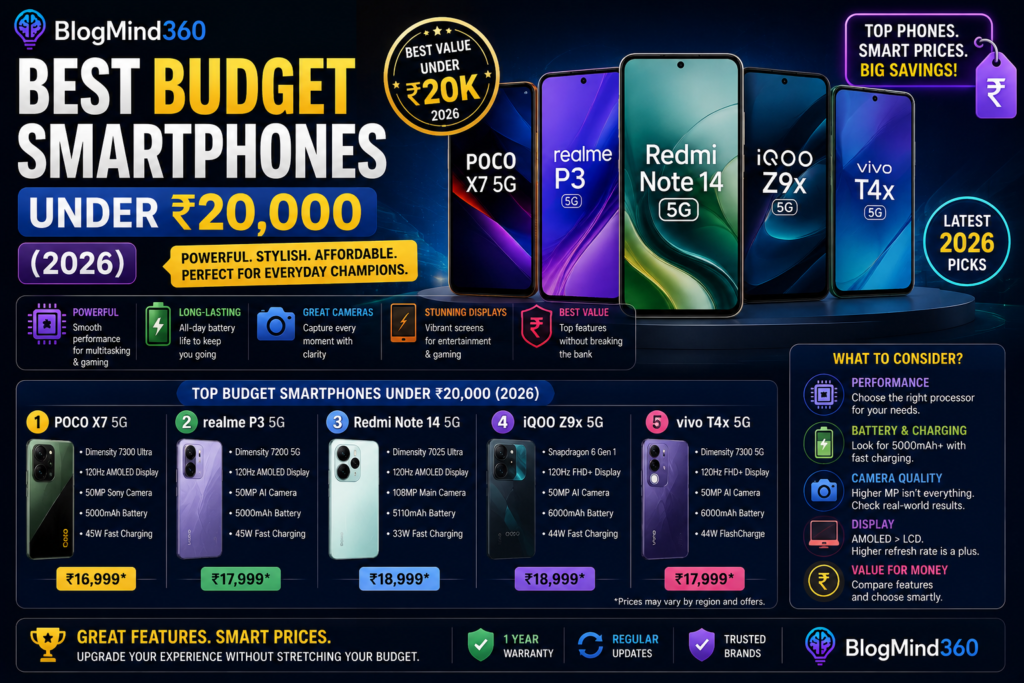
The ₹20,000 price bracket has quietly become the most competitive segment in the Indian smartphone market. Just a couple of years ago, spending under ₹20,000 meant settling for a laggy processor, a basic LCD screen, and a camera that struggled the moment the sun went down. That’s no longer true in 2026. Today, this segment offers AMOLED displays, 120Hz+ refresh rates, capable MediaTek and Snapdragon chipsets, and batteries big enough to comfortably last a full day — sometimes two.
With so many brands — Redmi, POCO, Oppo, Vivo, Motorola, Nothing, and iQOO — all fighting for the same budget-conscious buyer, picking the right phone can genuinely feel overwhelming. This guide breaks down the best budget smartphones under ₹20,000 available right now, what makes each one worth considering, and how to pick the one that actually fits how you use your phone day to day.
What to Expect at This Price Point in 2026
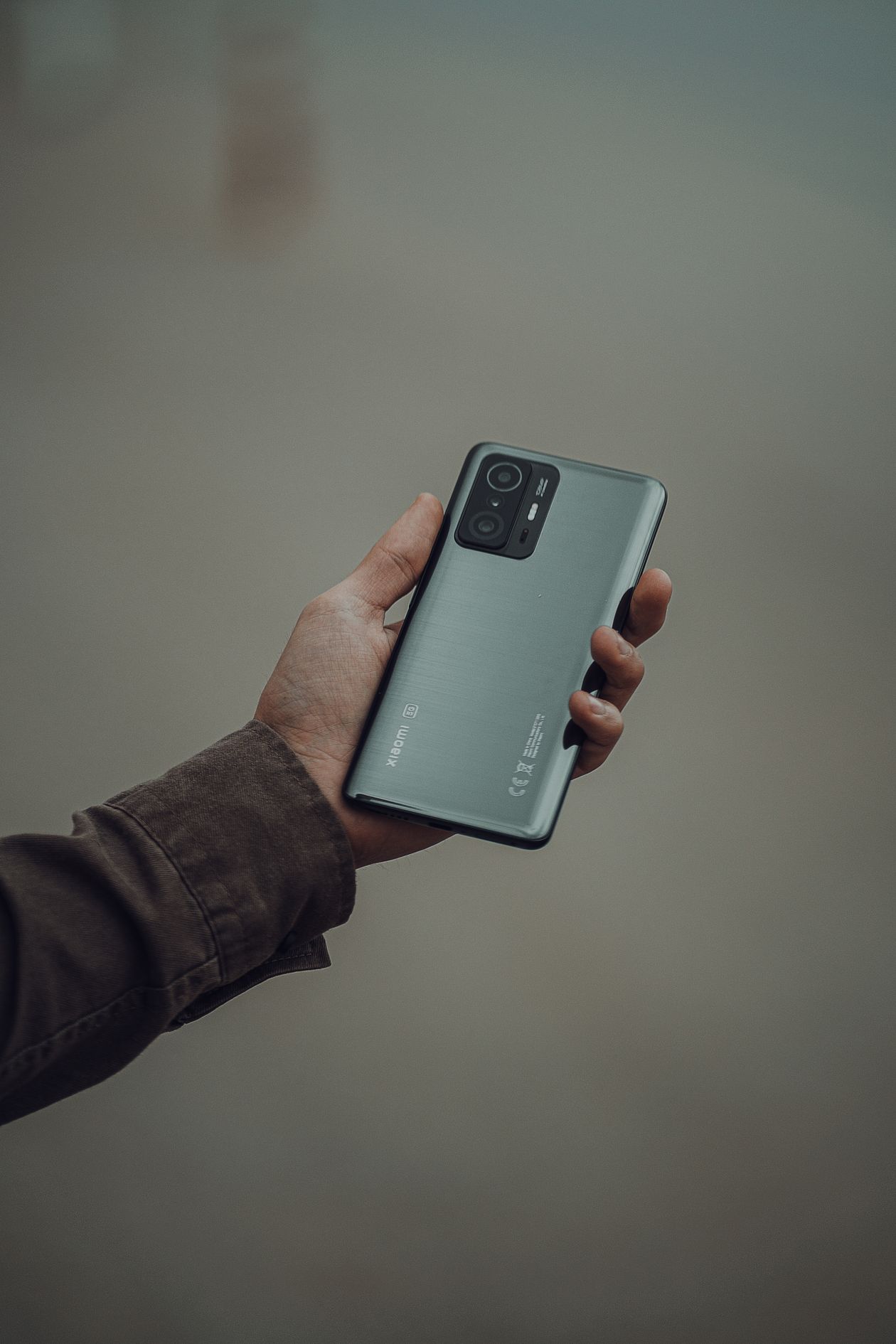
Before jumping into specific models, it helps to know what a genuinely good phone under ₹20,000 should offer in 2026, so you can spot a weak spec sheet dressed up with marketing language.
- Display: A 120Hz (or higher) refresh rate is now standard, and several phones in this range even offer AMOLED panels instead of basic LCD screens, which means deeper blacks and better contrast.
- Processor: Chips like the MediaTek Dimensity 7300 series, Snapdragon 6 Gen 3/4, and Snapdragon 6s Gen 3 handle everyday multitasking and light-to-moderate gaming comfortably.
- Battery: Anywhere from 5,000mAh to a massive 7,200mAh, usually paired with 33W to 80W fast charging.
- Camera: A 50MP primary sensor is now the norm, though ultra-wide and macro lenses at this price are often more about the spec sheet than genuinely useful photography.
- 5G connectivity: Virtually every phone in this segment now supports 5G, which wasn’t guaranteed even a year or two ago.
Best Budget Smartphones Under ₹20,000 in 2026
1. Redmi 15 5G — Best for Battery Life
If all-day (and then some) battery life is your top priority, the Redmi 15 5G is hard to beat in this segment. It packs a massive 7,000mAh battery with 33W fast charging, comfortably lasting well over a day of mixed use, and even stretching to two days for lighter users. The 6.9-inch IPS LCD display runs at a smooth 144Hz, which feels genuinely premium for scrolling and casual gaming, even if it’s not an AMOLED panel. Powered by the Snapdragon 6s Gen 3 chipset, it handles everyday tasks reliably, and the 50MP primary camera delivers solid daylight shots. This is the phone to pick if you’re tired of hunting for a charger by mid-afternoon.
2. CMF Phone 2 Pro — Best Design and Software Experience
Nothing’s budget sub-brand CMF continues to punch above its price with the Phone 2 Pro. Its standout feature isn’t a spec on paper — it’s the distinctive, customizable design language with swappable accessory attachments, which makes it feel far more premium than most phones in this range. Under the hood, the Dimensity 7300 Pro chipset paired with a 6.77-inch 120Hz AMOLED display delivers smooth day-to-day performance, and the clean, close-to-stock Android software (with fast update promises) is a genuine advantage over the heavier custom skins many competitors ship with. If you care about how your phone looks and feels as much as what it can do, this is the pick.
3. Oppo K14x 5G — Best All-Rounder for Everyday Use
The Oppo K14x 5G doesn’t try to win on any single spec — instead, it balances performance, battery, and charging speed better than almost anything else near ₹18,000. Its MediaTek Dimensity 6300 chipset comfortably handles multitasking, while the 6,500mAh battery paired with genuinely fast 80W charging means you can top up a big chunk of battery in well under an hour — a rare combination at this price. The 6.75-inch 120Hz LCD display and 50MP camera round out a phone that doesn’t have an obvious weak point, making it a safe, dependable pick for someone who just wants a phone that works well without thinking too hard about it.
4. Moto G96 5G — Best Display Quality
Motorola’s G96 5G stands out specifically for its screen — a 6.67-inch pOLED panel running at 144Hz with genuinely excellent color accuracy and high peak brightness that holds up well even in direct sunlight, something budget LCD panels usually struggle with. The Snapdragon 7s Gen 2 chipset handles everyday use, messaging, and casual gaming without issue, and the premium vegan-leather back panel gives it a design edge over the typical glass-and-plastic budget phone. If you spend a lot of time watching videos or reading on your phone, the display alone makes this worth a look.
5. Nothing Phone (3a) Lite — Best for a Distinctive Look
Nothing has built its entire brand identity around design, and the 3a Lite brings that same transparent, LED-accented aesthetic to a genuinely affordable price point. Under the unique exterior sits a competent Dimensity 7300 Pro chipset, a 6.77-inch 120Hz AMOLED display, and a versatile 50MP triple rear camera setup that performs better than most competitors in this bracket, especially in daylight. Nothing OS also remains one of the cleanest, most polished Android skins around, with a strong track record for timely software updates. If you want a phone that doesn’t look like everything else on the bus, this is it.
6. OPPO K13 5G — Best for Gaming on a Budget
The OPPO K13 5G, in its 8GB/256GB configuration, comes in right around the ₹20,000 mark and brings genuinely strong gaming credentials for the price. Its Snapdragon 6 Gen 4 chipset handles popular mobile games at solid frame rates, while the 6.67-inch 120Hz OLED display makes fast-moving on-screen action look noticeably sharper than the LCD panels found on several competitors. A massive 7,000mAh battery means gaming sessions won’t leave you anxiously watching the battery percentage drop. It’s a well-rounded phone that just happens to lean slightly more toward performance than most others on this list.
Quick Comparison: Which Phone Should You Pick?
| Phone | Best For | Display | Battery |
|---|---|---|---|
| Redmi 15 5G | Battery life | 6.9″ LCD, 144Hz | 7,000mAh |
| CMF Phone 2 Pro | Design & clean software | 6.77″ AMOLED, 120Hz | 5,000mAh |
| Oppo K14x 5G | Balanced everyday use | 6.75″ LCD, 120Hz | 6,500mAh |
| Moto G96 5G | Display quality | 6.67″ pOLED, 144Hz | 5,500mAh |
| Nothing Phone 3a Lite | Unique design | 6.77″ AMOLED, 120Hz | 5,000mAh |
| OPPO K13 5G | Gaming | 6.67″ OLED, 120Hz | 7,000mAh |
Note: Prices in this segment fluctuate frequently due to festive sales, bank offers, and exchange discounts on platforms like Amazon and Flipkart. Always check the current price before purchasing, as configurations (RAM/storage variants) can push a phone slightly above or below the ₹20,000 mark.
AMOLED vs LCD: Does It Actually Matter at This Price?
One of the biggest differences between phones in this segment is display technology, and it’s worth understanding why it matters before you decide it’s just a marketing checkbox.
AMOLED panels produce true blacks (by turning individual pixels off entirely), which results in significantly better contrast, more vivid colors, and generally better viewing angles compared to LCD screens. AMOLED also tends to be more power-efficient when displaying darker content, like most apps in dark mode. LCD panels, on the other hand, have improved a lot and can still offer high refresh rates and good brightness, but they generally can’t match the contrast and color depth of a good AMOLED screen.
If you regularly watch videos, browse Instagram or YouTube, or just care about visual quality, prioritizing a phone with an AMOLED display — like the CMF Phone 2 Pro, Nothing Phone 3a Lite, or OPPO K13 — is worth it even if it means slightly compromising elsewhere. If display quality matters less to you than raw battery life or charging speed, a well-tuned LCD phone like the Redmi 15 or Oppo K14x is still a perfectly good choice.
How Much RAM and Storage Do You Actually Need?
Most phones in this segment now start at 6GB or 8GB of RAM, and 8GB has quickly become the sensible minimum if you plan to keep your phone for two to three years without it starting to feel sluggish.
On storage, 128GB is a comfortable baseline for most users, especially since many of these phones lack a microSD card slot for expansion. If you take a lot of photos and videos, download offline content for travel, or install several large games, stepping up to a 256GB variant — often available for a relatively small price bump — will save you from constantly juggling storage a year or two down the line.
Chipsets Explained: What MediaTek and Snapdragon Numbers Actually Mean
Chipset names in this segment can be confusing, since both MediaTek and Qualcomm release similarly numbered chips at different performance tiers. Here’s a simplified way to think about the most common ones you’ll see under ₹20,000:
- MediaTek Dimensity 6300: An entry-to-mid performer, fine for everyday apps, browsing, and light gaming, but it’ll show its limits with graphically demanding games at high settings.
- MediaTek Dimensity 7300 / 7300 Pro: A noticeable step up, handling most popular mobile games smoothly at medium-to-high settings, and generally the sweet spot for this price segment.
- Snapdragon 6 Gen 3 / Gen 4: Qualcomm’s mid-tier budget chips, generally efficient and reliable for everyday multitasking, with the Gen 4 offering a modest but noticeable performance bump.
- Snapdragon 6s Gen 3: A slightly cost-optimized variant, still perfectly capable for daily use and light gaming, commonly found in battery-focused phones like the Redmi 15.
If mobile gaming is a priority for you, look specifically for phones running the Dimensity 7300 series or Snapdragon 6 Gen 4 — the performance difference over entry-level chips is noticeable in frame rates and how well the phone handles heat during longer sessions.
Camera Expectations: What ₹20,000 Actually Gets You
Nearly every phone in this segment ships with a 50MP primary camera, which has become the industry-standard baseline. In good daylight, most of these phones produce genuinely sharp, well-exposed photos that are perfectly shareable on social media. Where they consistently struggle is low-light photography — expect more noise, softer detail, and slower shutter processing once the sun goes down.
Secondary cameras (ultra-wide or macro lenses) at this price are often more of a marketing checkbox than a genuinely useful tool — image quality from these secondary sensors is usually noticeably weaker than the primary camera. If photography is a major priority for you, it’s worth looking specifically at phones like the Nothing Phone 3a Lite, which has put more effort into its multi-camera setup than most competitors in this range.
Common Mistakes to Avoid When Buying a Budget Phone
- Chasing megapixel counts alone. A 108MP camera on a cheap sensor can perform worse than a well-tuned 50MP camera. Read actual camera reviews rather than trusting the spec sheet alone.
- Ignoring software update policies. Some brands commit to two or three years of OS updates on budget phones; others offer just one. Check this before buying if you plan to keep the phone long-term.
- Overlooking RAM for the sake of a lower price. A 4GB RAM variant might save you a couple thousand rupees upfront but can noticeably shorten how long the phone stays smooth and usable.
- Forgetting to check for 5G band compatibility. Not all 5G phones support every band your carrier uses — a quick search of your specific telecom operator’s supported bands avoids surprises later.
- Buying during a random week instead of a sale event. Prices in this segment regularly drop during major sales (like the Amazon Great Indian Festival or Flipkart’s Big Billion Days), so timing your purchase can save a meaningful amount.
How to Choose the Right Phone for You
- Want the longest battery life without compromise: Go with the Redmi 15 5G and its massive 7,000mAh battery.
- Care most about looks and clean software: The CMF Phone 2 Pro or Nothing Phone 3a Lite both stand out from the crowd.
- Want a dependable, no-drama daily driver: The Oppo K14x 5G balances everything well without any glaring weaknesses.
- Watch a lot of video or care about screen quality: The Moto G96 5G’s pOLED display is the best in this price bracket.
- Play mobile games regularly: The OPPO K13 5G’s stronger chipset and OLED display make gaming noticeably smoother.
Frequently Asked Questions
Is it worth buying a phone under ₹20,000 in 2026, or should I save up for a higher-end model?
For most everyday users — messaging, social media, streaming, browsing, and casual gaming — phones in this segment genuinely deliver a smooth, capable experience. Unless you specifically need flagship-level camera performance or heavy gaming power, spending significantly more usually brings diminishing returns for typical daily use.
Do budget phones under ₹20,000 support 5G in India?
Yes, nearly every phone released in this segment in 2026 supports 5G as standard, including support for Jio and Airtel’s 5G networks across most regions.
Which is more important at this price — RAM or the processor?
Both matter, but if you have to choose, prioritize enough RAM (8GB is a safe minimum) since it directly affects how smoothly your phone handles multitasking and app switching over time, even more than small differences between similarly-tiered chipsets.
How long will a phone in this price range last before it feels outdated?
With 8GB RAM and a mid-tier chipset like the Dimensity 7300 or Snapdragon 6 Gen 4, you can reasonably expect two to three years of smooth daily performance before newer, heavier apps start to strain the hardware noticeably.
Should I buy online or from a local retail store?
Online platforms like Amazon and Flipkart typically offer better pricing, especially during sale events, along with easy return policies. Local stores can be useful if you want to physically handle the phone first or need immediate after-sales support, but you’ll often pay a slightly higher price for that convenience.
Final Thoughts
The ₹20,000 segment in 2026 is arguably the best value zone in the entire Indian smartphone market right now — you genuinely don’t need to compromise on display quality, battery life, or performance the way you did just a couple of years ago. The right choice really comes down to what matters most to you personally: if it’s battery life, the Redmi 15 5G is tough to beat; if it’s design and software polish, look at the CMF Phone 2 Pro or Nothing Phone 3a Lite; and if you just want a phone that handles everything competently without any obvious weak spot, the Oppo K14x 5G is a safe, dependable pick.
Whichever you choose, keep an eye on ongoing sales and bank card offers before buying — in this segment, timing your purchase around a sale event can often save you enough to bump up to a higher storage variant for free.