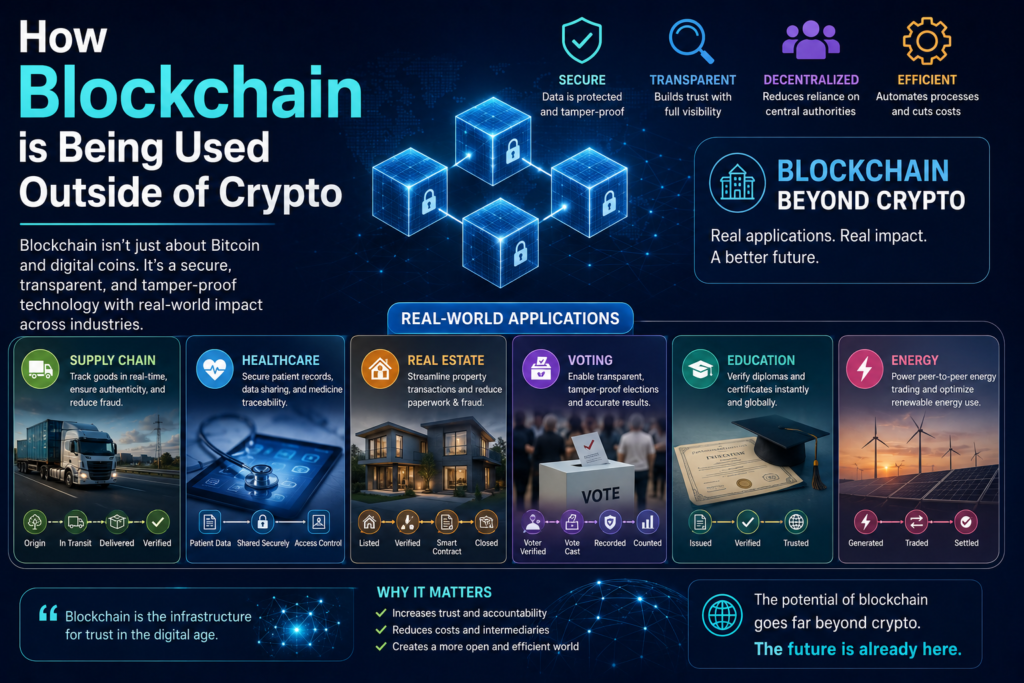
Blockchain technology is often associated primarily with cryptocurrency, but its underlying properties — transparency, tamper resistance, and decentralized record-keeping — have found practical applications well beyond digital currency. This article explores real-world, non-cryptocurrency uses of blockchain technology that have gained genuine traction.
Supply Chain Tracking
One of blockchain’s most practical applications is tracking products through complex supply chains, creating a permanent, verifiable record of a product’s journey from origin to consumer. This is particularly valuable for verifying the authenticity of high-value goods, ensuring food safety by quickly tracing contamination sources, and confirming ethical sourcing claims for products like coffee, diamonds, or textiles.
Major retailers and food companies have piloted blockchain-based supply chain systems specifically to improve traceability and respond faster to safety recalls.
Digital Identity Verification
Blockchain-based identity systems aim to give individuals more control over their own identity credentials, allowing them to share verified information — like proof of age or professional certification — without relying on a central authority to confirm it each time. This has particular relevance in regions with limited traditional identity infrastructure.
Healthcare Records Management
Some healthcare organizations have explored blockchain for securely sharing patient records across different providers while maintaining patient control over who can access their data. The tamper-resistant nature of blockchain records also appeals to healthcare use cases where an auditable, unalterable history of who accessed or modified a record is important for compliance.
Voting Systems
Blockchain-based voting has been explored as a way to create more transparent and verifiable election processes. However, adoption for actual government elections remains limited and controversial, with significant concerns still being debated around security, accessibility, and voter privacy.
Intellectual Property and Royalties
Artists and content creators have used blockchain to establish verifiable ownership records for digital and physical works, and to automate royalty payments through smart contracts that execute automatically when specific conditions are met.
Financial Settlement and Cross-Border Payments
Beyond cryptocurrency speculation, blockchain technology underpins some genuine improvements in financial infrastructure, particularly for cross-border payments and settlement, where it can reduce the time and cost of transferring money between institutions in different countries.
Frequently Asked Questions
Do I need to understand cryptocurrency to understand these blockchain uses?
No, many of these applications use the underlying technology for record-keeping entirely separate from digital currency.
Are these blockchain applications widely adopted yet?
Adoption varies by use case, with supply chain tracking seeing more traction than experimental areas like voting.
Is blockchain always the best solution for these problems?
Not necessarily, a well-designed traditional database can sometimes accomplish similar goals more efficiently.
Can blockchain records be changed after they’re created?
Recorded data becomes extremely difficult to alter, which is precisely why it’s valuable for trustworthy audit trails.
Is blockchain technology energy-intensive?
Energy use varies by design; newer systems use far less energy than the earliest cryptocurrency networks.
Which industries are adopting blockchain fastest outside of finance?
Supply chain, logistics, healthcare, and intellectual property applications show the most concrete adoption.
Conclusion
While cryptocurrency remains blockchain’s most well-known application, the technology’s core strengths — transparency, tamper resistance, and decentralized verification — have found genuine, practical use across supply chains, identity verification, healthcare records, and more. These quieter, more targeted applications may ultimately prove more durable than the speculative excitement that first brought blockchain into the public spotlight.