Getting started with a smart home can feel overwhelming given the sheer number of device categories and competing platforms available. This guide walks through the smart home devices that offer the most practical value for beginners, along with tips on avoiding common early mistakes.
Start With a Smart Speaker or Display
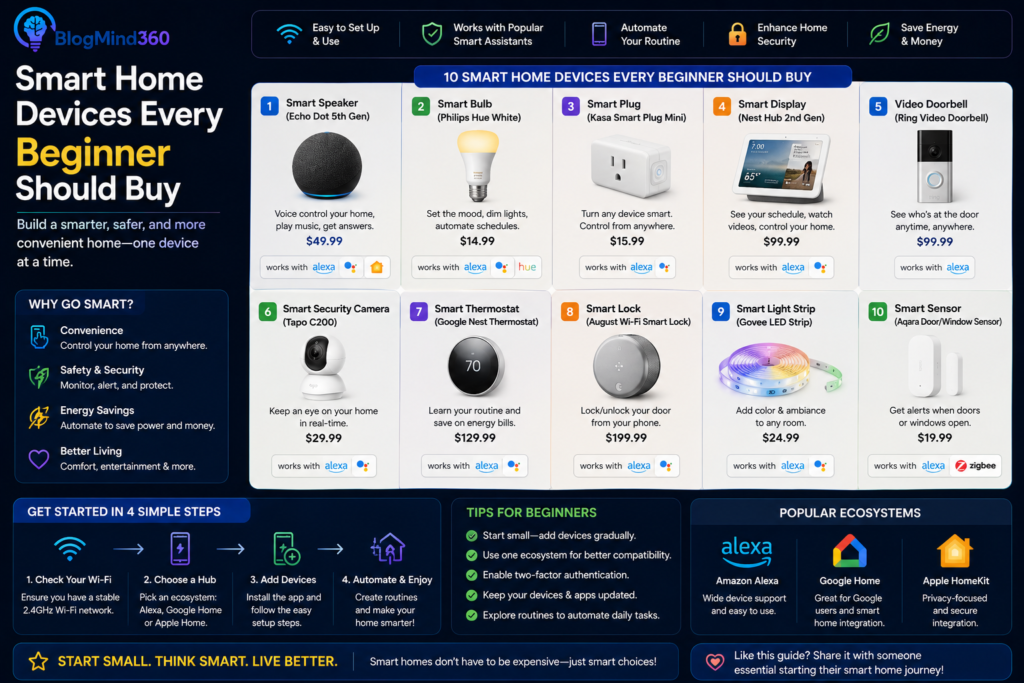
A smart speaker or display serves as a natural entry point into the smart home, providing voice control for other devices you add later, along with useful standalone features like music playback, timers, and quick information lookups. Choosing a platform here also determines which smart home ecosystem your other devices will most easily integrate with, so it’s worth considering this choice as a foundation for future purchases.
Smart Plugs: The Easiest Starting Point
Smart plugs are one of the most affordable and flexible smart home devices, letting you add basic smart control — scheduling and remote on/off — to virtually any existing lamp, fan, or small appliance without replacing the device itself. They’re an excellent low-cost way to experience smart home automation before investing in more expensive dedicated smart devices.
Smart Lighting
Smart bulbs and light switches allow for scheduling, remote control, and often color and brightness customization, and tend to be one of the most immediately satisfying smart home upgrades for new users. Starting with a few bulbs in frequently used rooms, rather than replacing every light in your home at once, is a practical way to test whether the added convenience is worth the investment before committing further.
Smart Thermostats
A smart thermostat can learn your schedule and preferences over time, automatically adjusting temperature to improve comfort and potentially reduce energy costs. This is generally one of the smart home upgrades most likely to pay for itself over time through energy savings, making it a worthwhile investment even for otherwise minimal smart home adopters.
Smart Security Devices
Video doorbells and smart locks offer practical security and convenience benefits, letting you see who’s at your door remotely or grant access to guests without a physical key. These devices are worth researching carefully for reliability and data privacy practices, given their more security-sensitive role compared to other smart home categories.
Common Beginner Mistakes to Avoid
A common early mistake is buying devices across several incompatible platforms before checking whether they’ll actually work together smoothly, leading to a frustrating patchwork of separate apps rather than a unified smart home experience. It’s generally wiser to research platform compatibility upfront and expand gradually within a chosen ecosystem, rather than buying whatever device looks appealing without checking compatibility first.
Frequently Asked Questions
Do I need a smart home hub to get started?
Many modern smart home devices connect directly to Wi-Fi and work through a smartphone app without a separate hub, though a hub can offer more reliable connectivity for larger setups.
Are smart home devices difficult to set up?
Most consumer smart home devices are designed for straightforward setup through a companion app, typically taking just a few minutes per device.
Is my data safe with smart home devices?
Data privacy varies by manufacturer, so it’s worth reviewing a specific device’s privacy policy, particularly for cameras and locks.
What’s the most cost-effective smart home device to start with?
Smart plugs generally offer the best value for testing smart home automation since they’re inexpensive.
Can smart home devices work if my internet goes down?
Many devices lose remote access during an outage, though some retain basic local functionality.
Do smart home devices increase my electricity bill?
Most use very little power, and smart thermostats often reduce overall energy costs.
Conclusion
Building a smart home doesn’t require buying everything at once — starting with a smart speaker, a few smart plugs, and perhaps a smart thermostat provides a solid, practical foundation that beginners can expand thoughtfully over time. Prioritizing platform compatibility from the start will save considerable frustration as your smart home setup grows.